Level: BeginnerApex Fundamentals
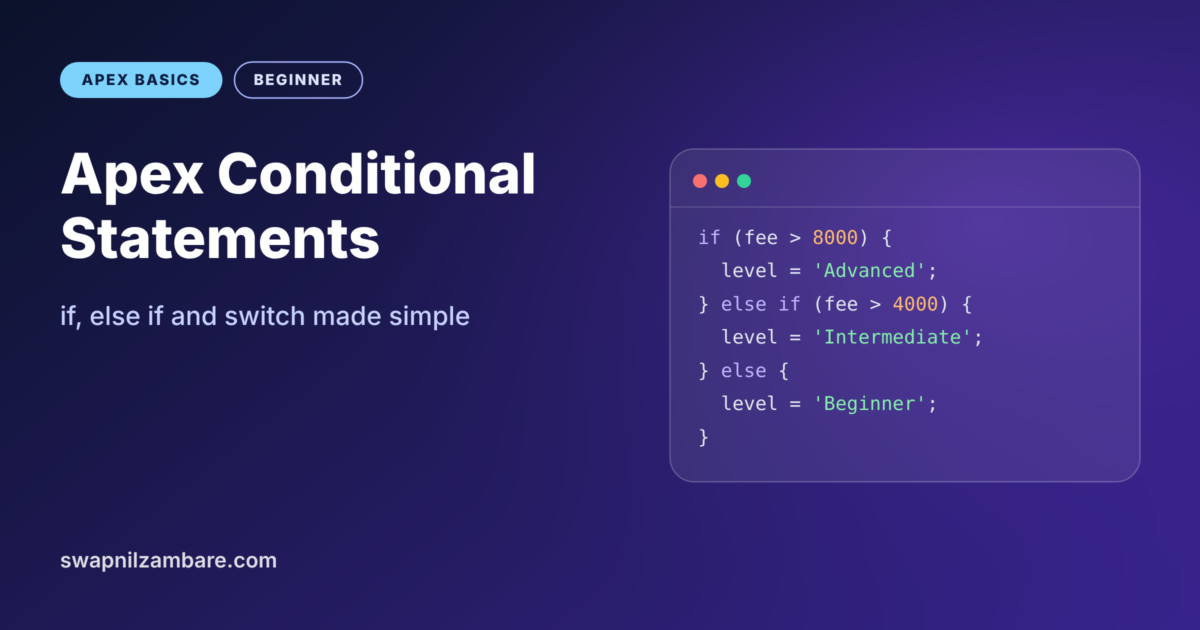
Apex Conditional Statements: if, else and switch Explained
Apex Conditional Statements let your code make decisions. For example, they answer “Is the fee too low?” or “Which level is this course?”. Then…
Topic
Apex Conditional Statements let your code make decisions. For example, they answer “Is the fee too low?” or “Which level is this course?”. Then…
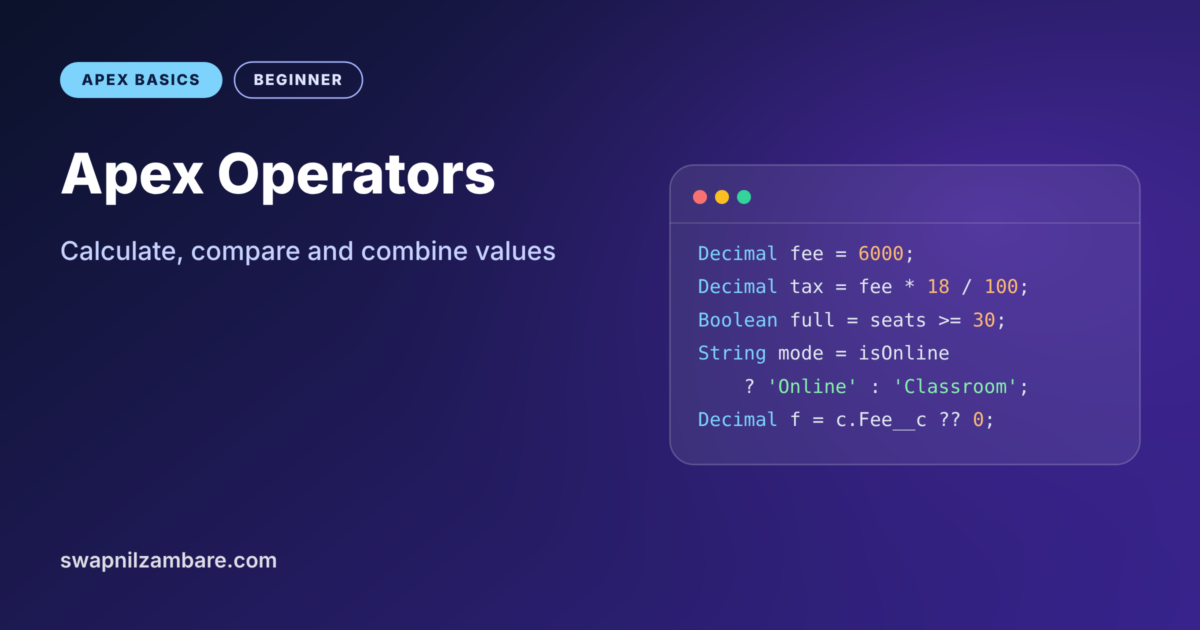
Apex Operators are the symbols that let your code add numbers, compare values and combine conditions. Without them, variables would just sit there holding…
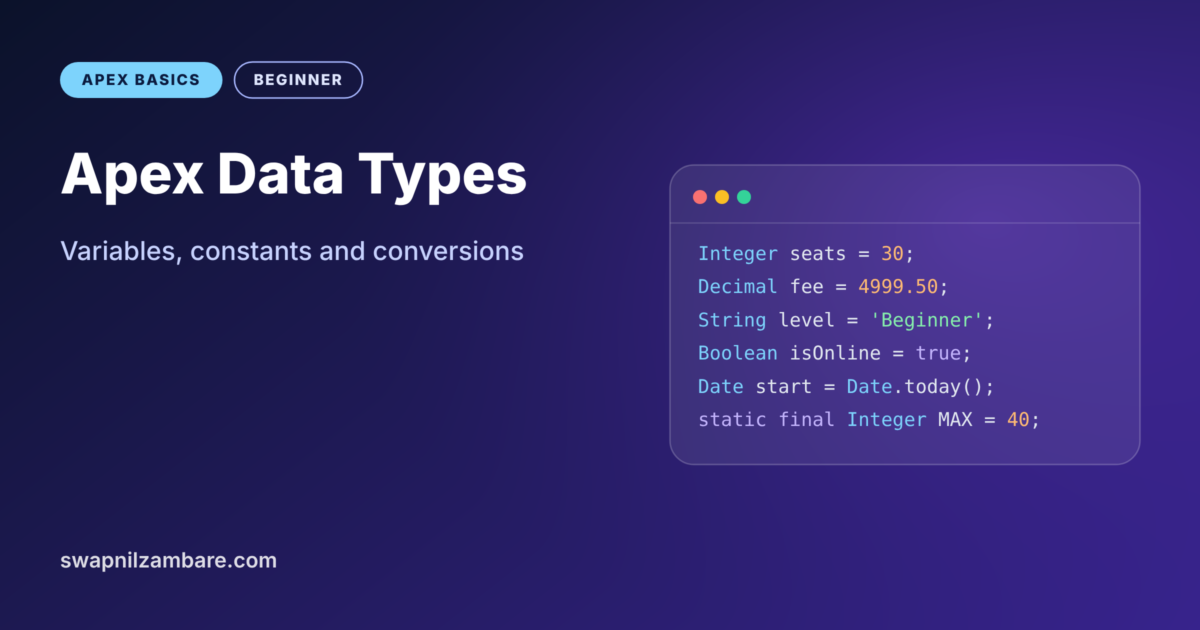
Apex Data Types decide what kind of value each variable can hold. For example, a variable may hold a number, some text or a…
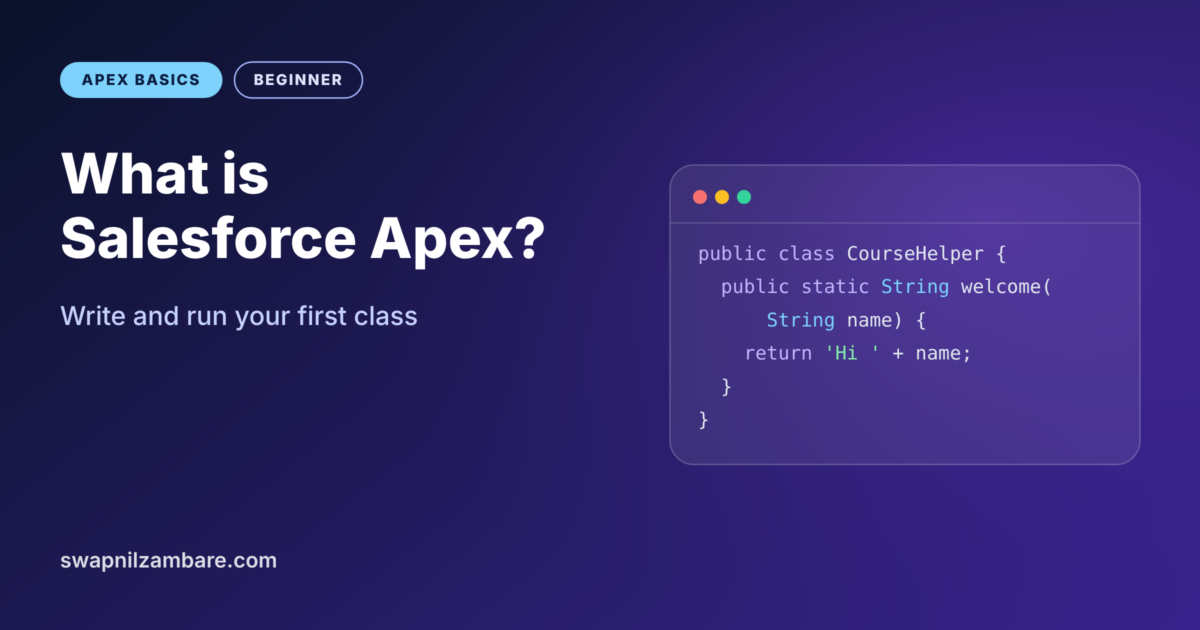
Salesforce Apex is the programming language that runs inside Salesforce, and almost every developer job asks for it. In this post, you will learn…
Git for Salesforce is the skill that turns a solo coder into a real team developer. Git keeps a full history of every change…
The Salesforce Developer Console is a code tool that lives right inside your browser. You do not install anything. You open it from Setup,…
Salesforce CLI Deploy and retrieve commands are how developers move metadata between their computer and their orgs. Deploy sends your files up to an…
Scratch Orgs are short-lived Salesforce orgs that you create from the command line in under a minute. They sit next to two other org…
A Salesforce DX Project is the folder on your computer that holds all the metadata for your app. In the last post, you created…
Salesforce CLI Setup is the first hands-on step in your developer path. Once your tools are ready, you can write Apex on your own…