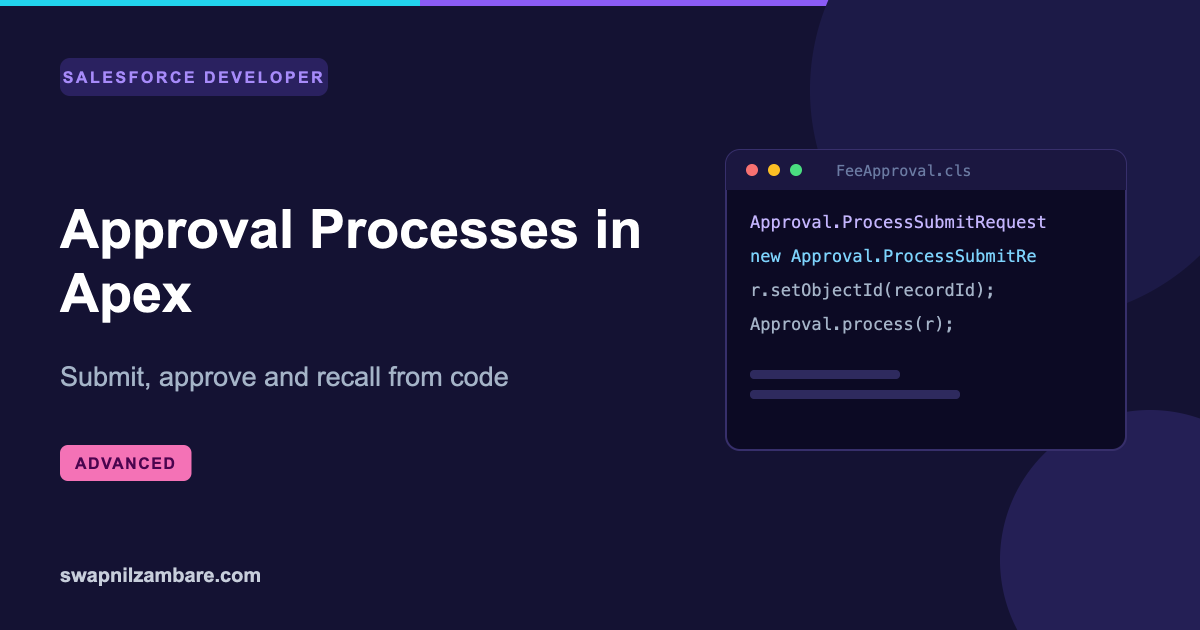
Level: AdvancedApex Fundamentals
Approval Processes in Apex: Submit, Approve and Recall in Code
Approval Processes in Apex let your code submit a record for approval, approve it, reject it or recall it, without anyone clicking a button.…
Topic
Approval Processes in Apex let your code submit a record for approval, approve it, reject it or recall it, without anyone clicking a button.…
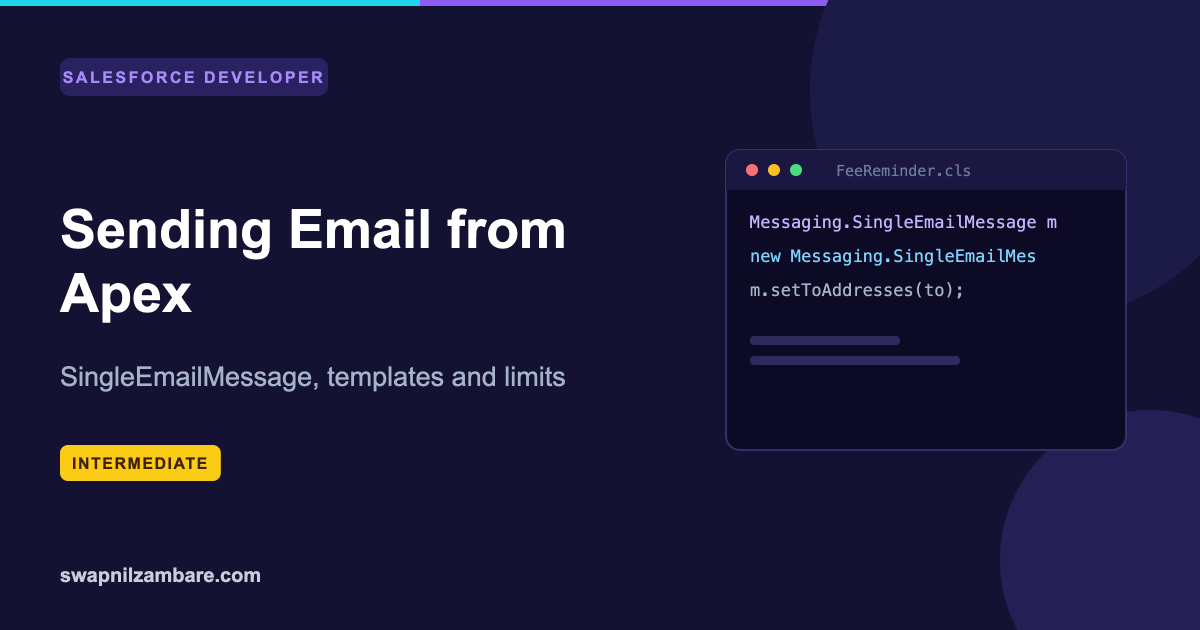
Sending Email from Apex gives you full control over who gets a message, what it says and when it goes out. A scheduled job…
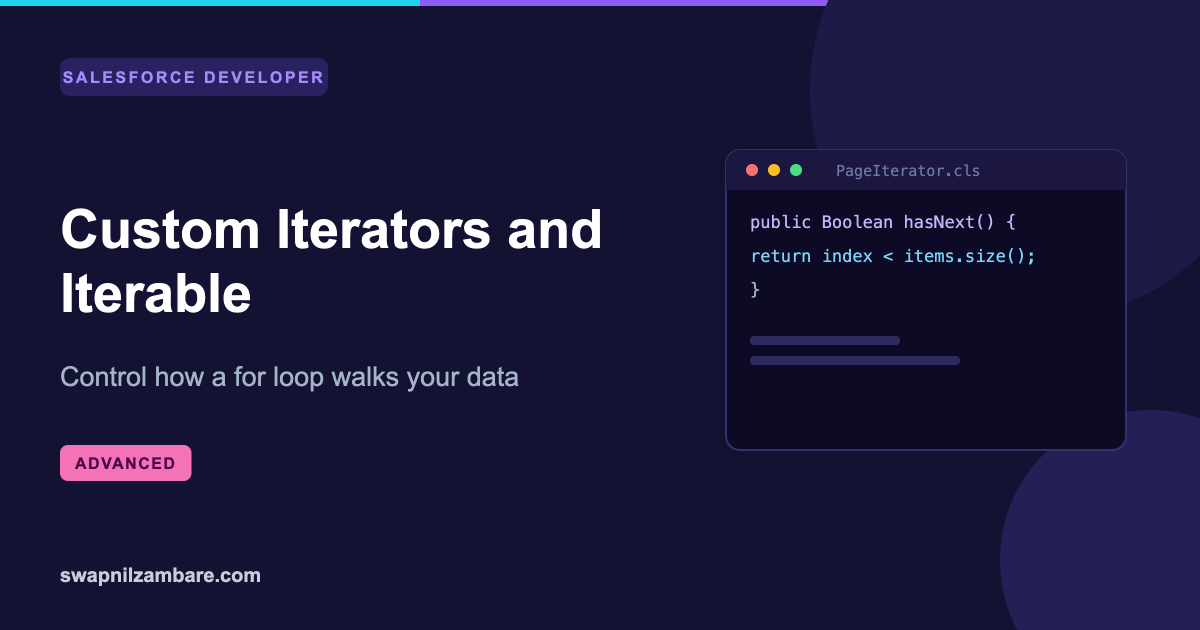
An Apex Custom Iterator lets you decide how a for loop moves through data. Instead of looping a list that already exists, you supply…
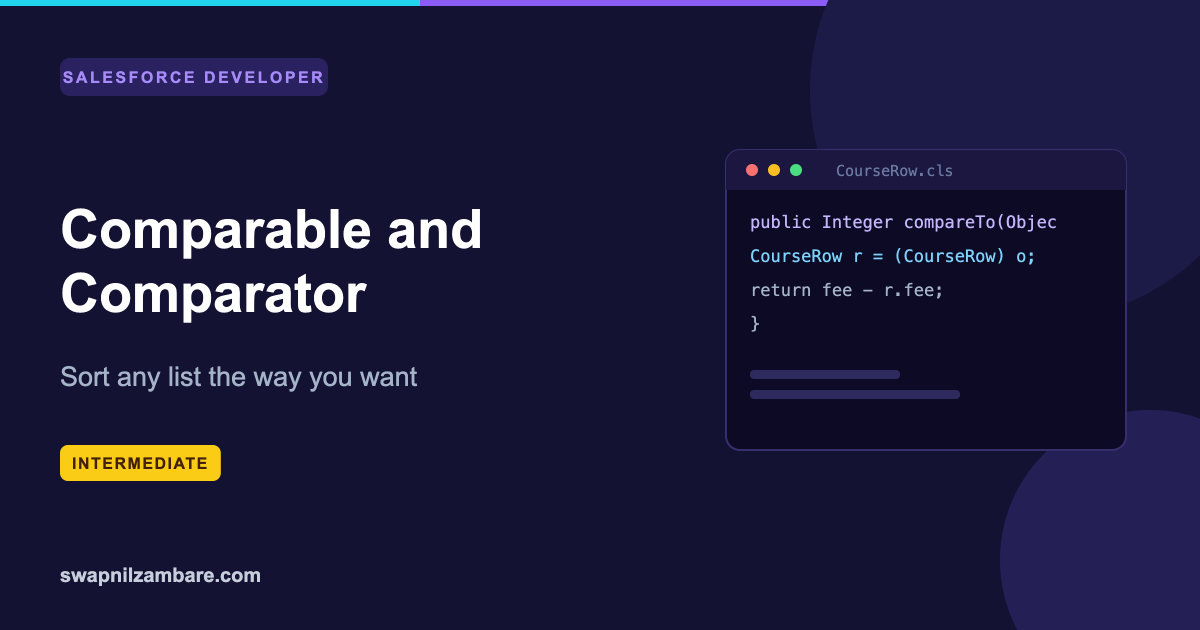
Apex Comparable lets you decide how a list of your own objects should be sorted. By default, Apex can sort numbers and text, but…
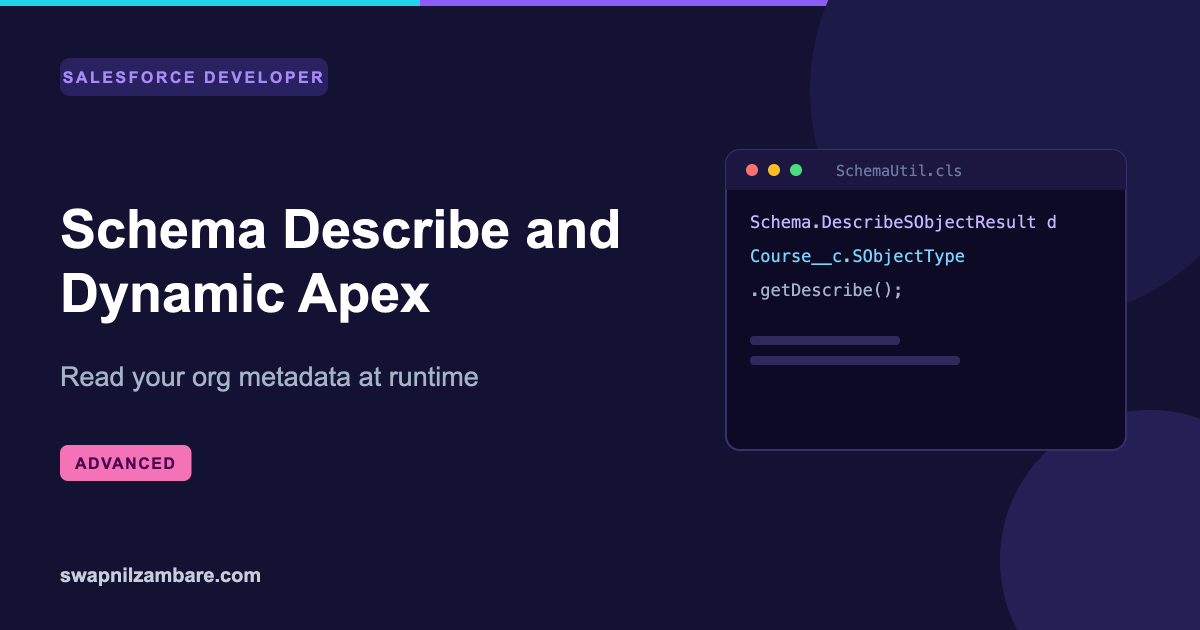
Schema Describe lets your Apex ask the org what objects and fields actually exist, while the code is running. So you can build a…
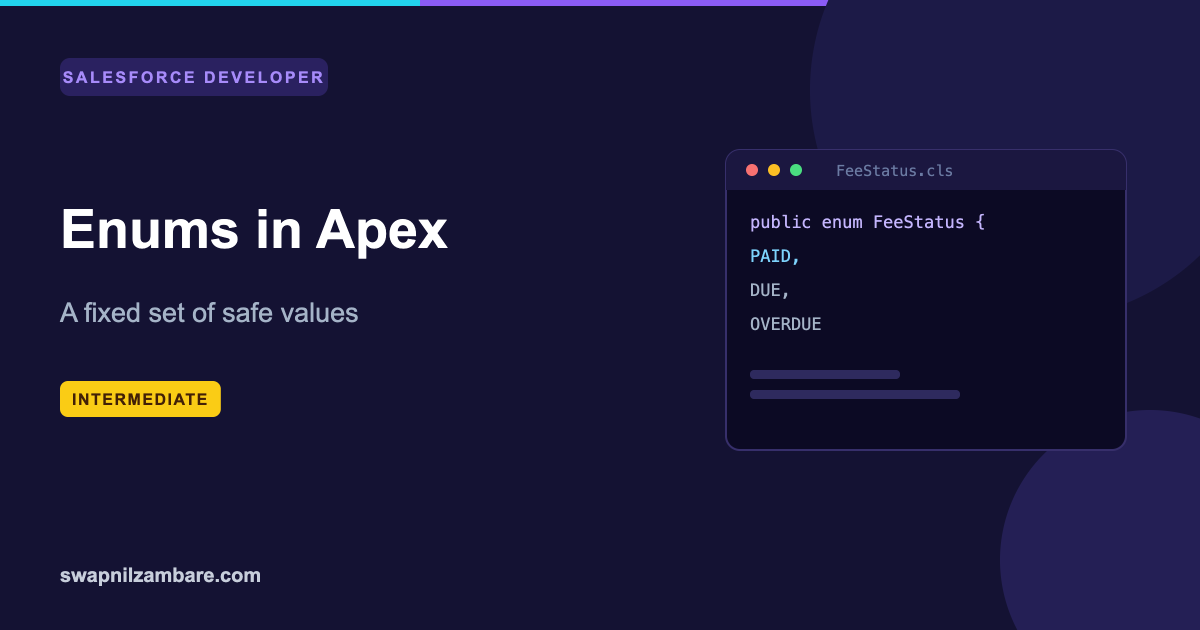
Apex Enums let you define a small fixed set of named values, such as PAID, DUE and OVERDUE. The compiler then refuses anything outside…
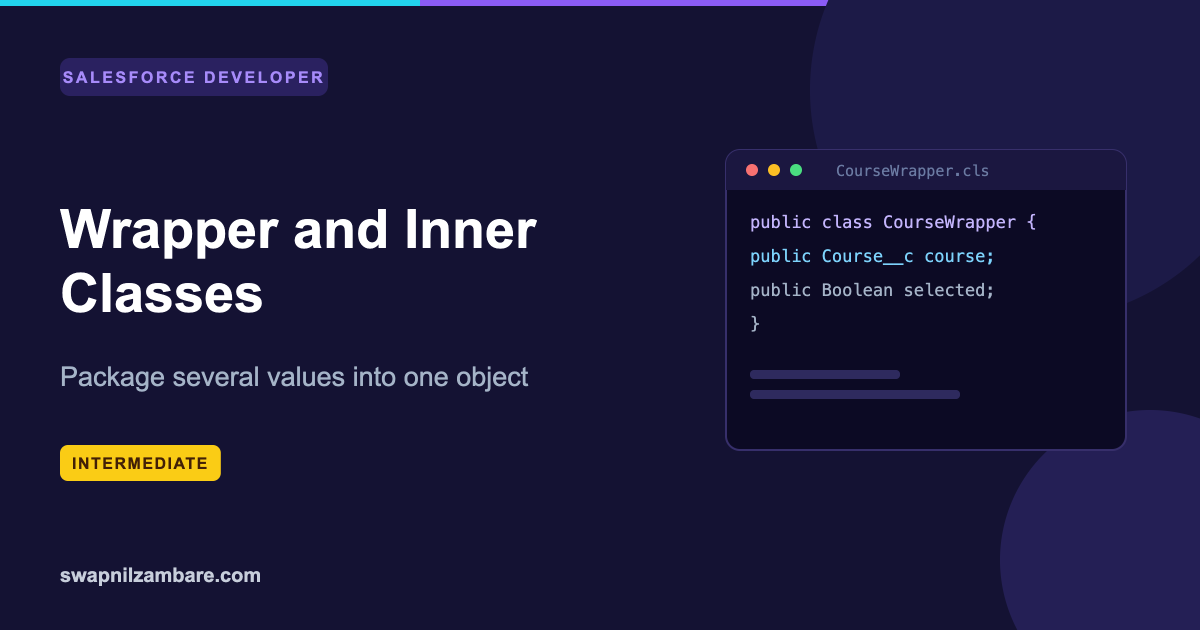
An Apex Wrapper Class is a small class you write to hold several values together as one object. The classic case is a table…
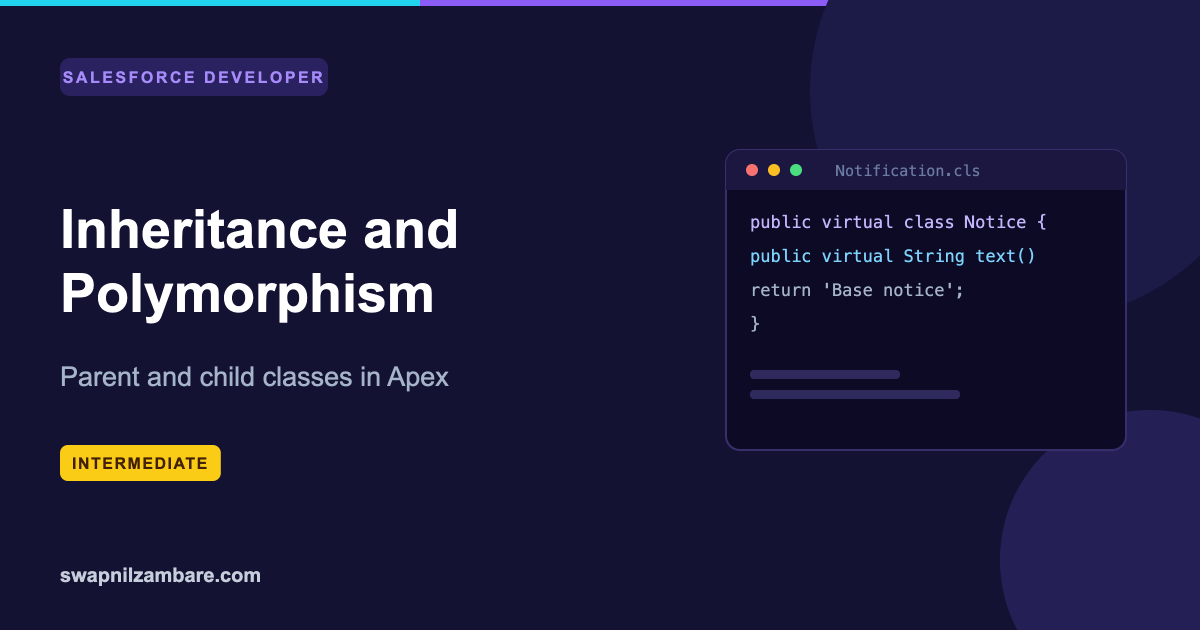
Apex Inheritance lets a child class reuse the code of a parent class and change only the parts it needs. So a base notification…
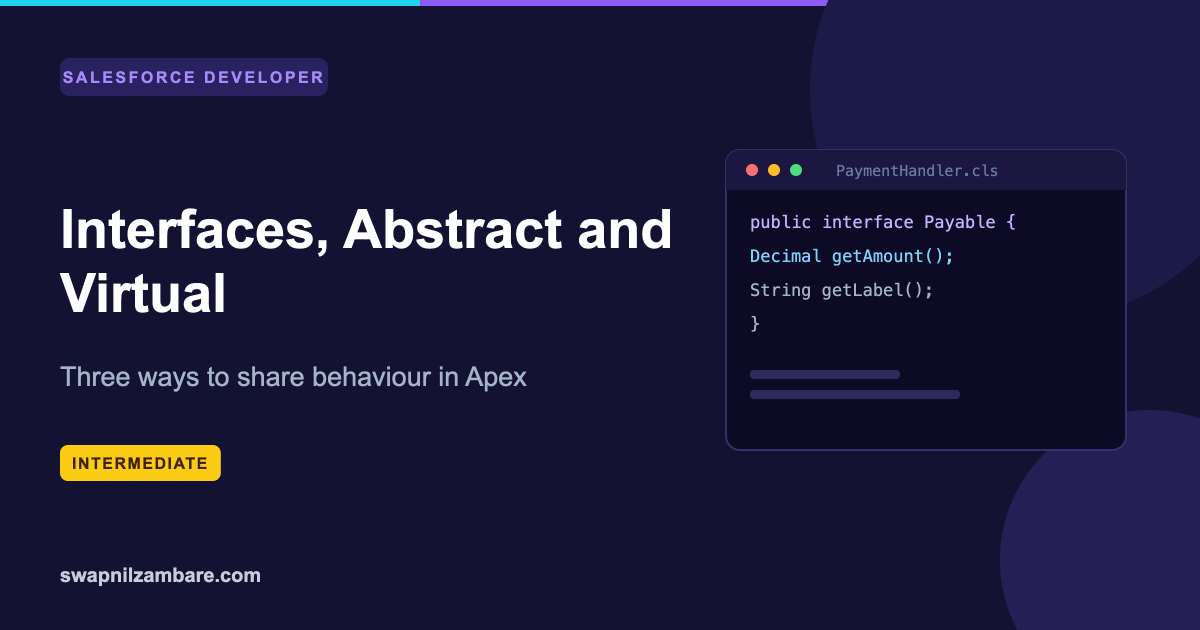
Apex Interfaces let you write code that works with many different classes without knowing which one it will get. You name the methods, and…
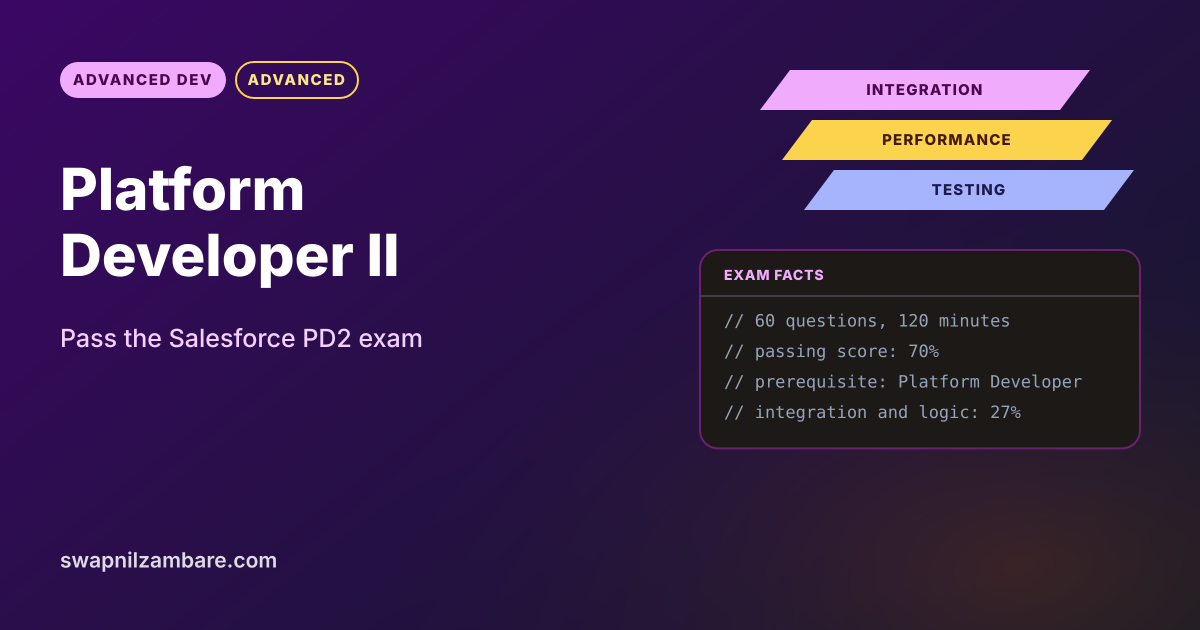
Platform Developer II, or PD2, is Salesforce’s advanced developer certification for people who design and build complex, high-performing solutions. It goes beyond writing working…