Level: BeginnerApex Fundamentals
Apex Classes and Objects: Constructors Explained Simply
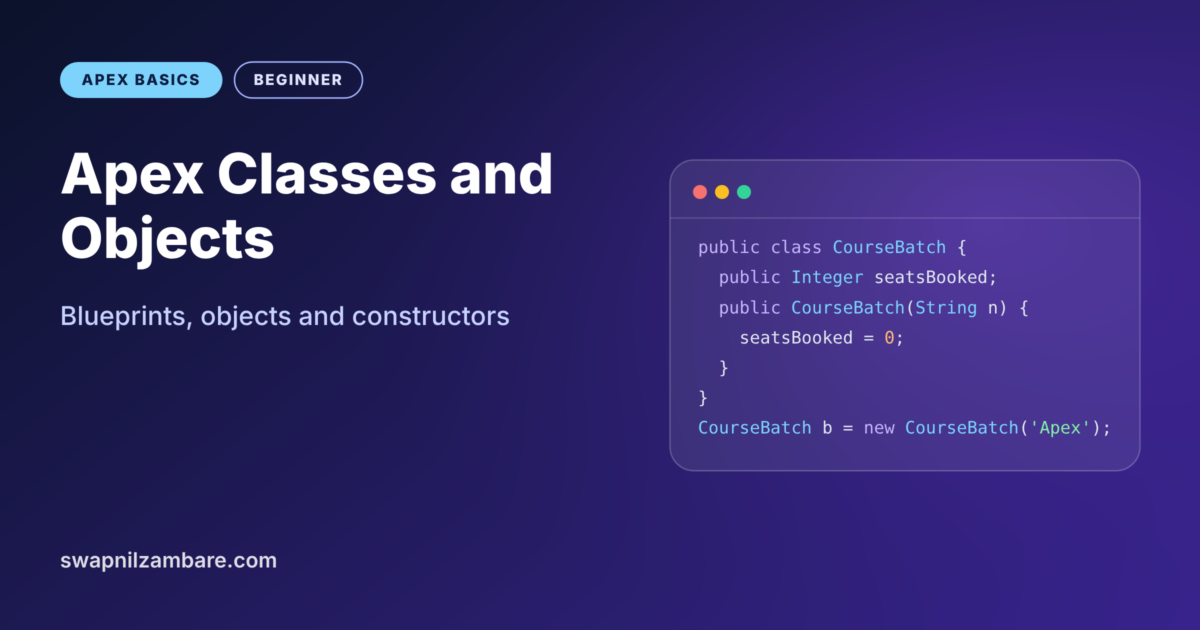
Apex Classes and Objects are the core of object-oriented programming in Salesforce. A class is a blueprint that describes some data and the actions…
Apex Classes and Objects are the core of object-oriented programming in Salesforce. A class is a blueprint that describes some data and the actions…
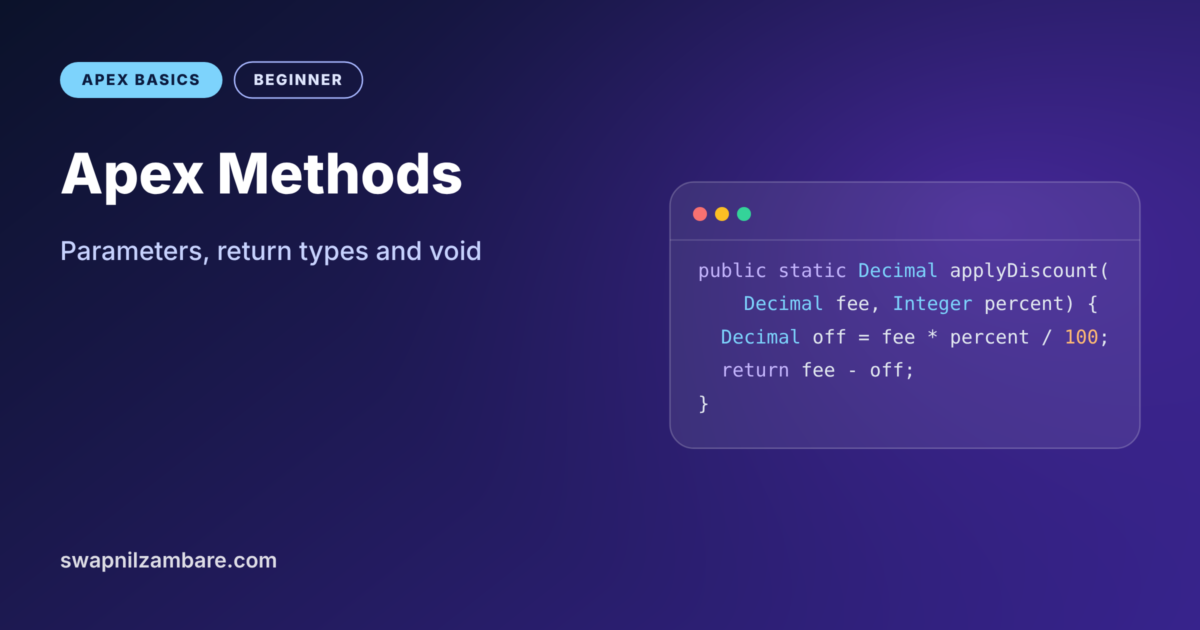
Apex Methods give a name to a block of code that does one job. For example, one method might calculate a fee, and another…
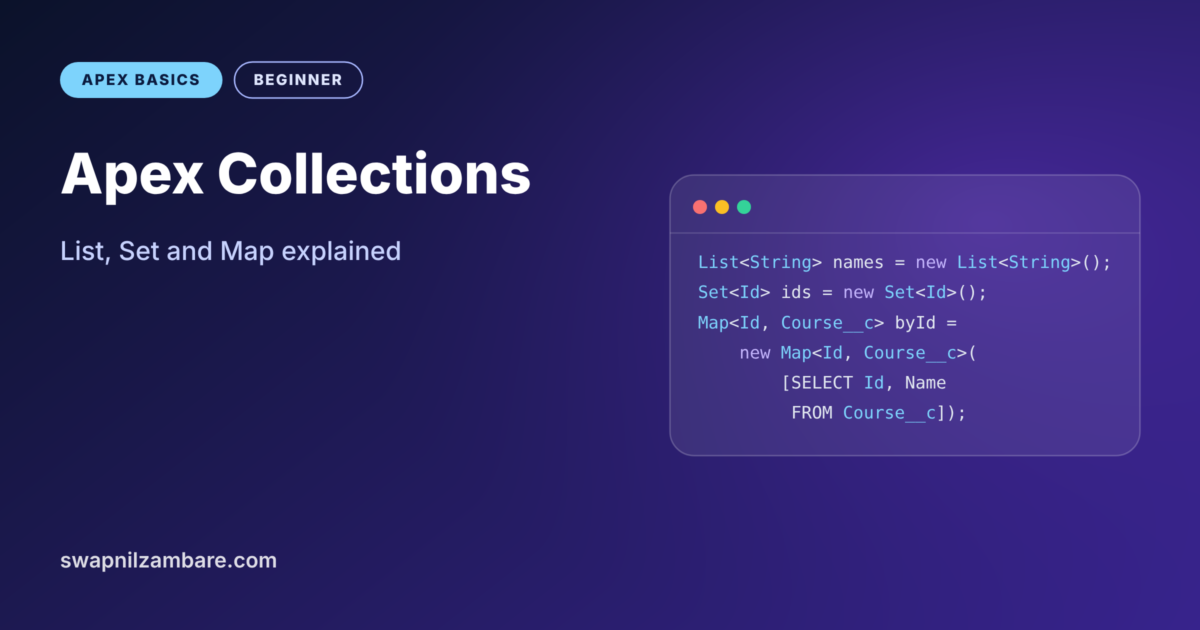
Apex Collections are variables that hold many values at once instead of just one. Apex gives you three kinds: List, Set and Map. They…
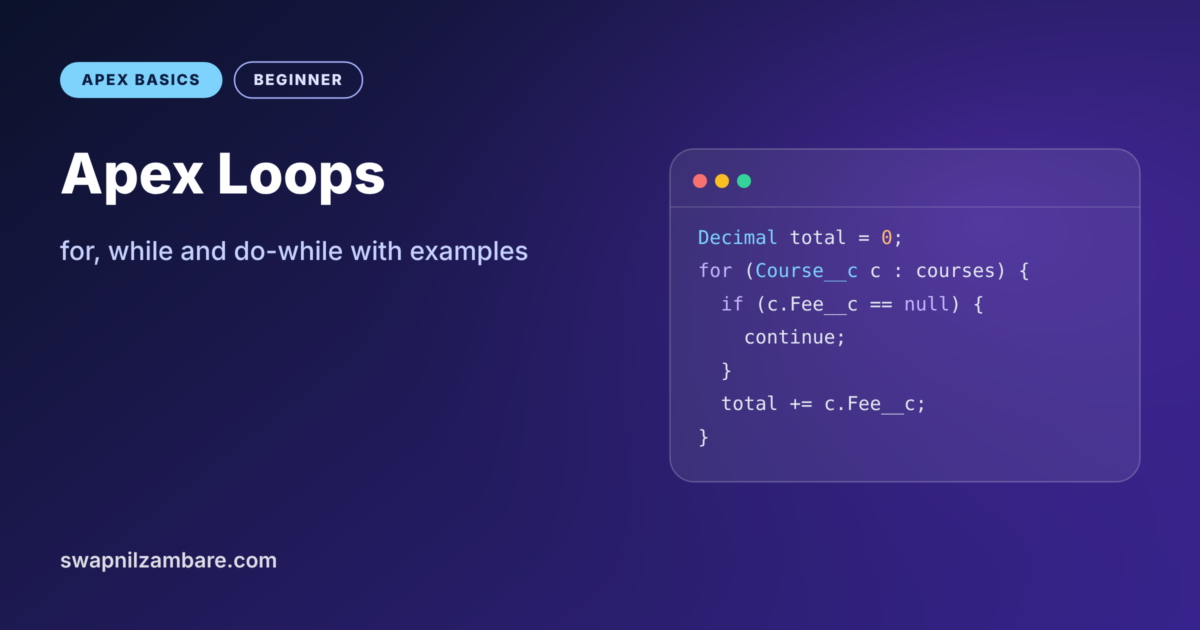
Apex Loops let your code repeat the same work many times without writing the same lines again and again. You might need to check…
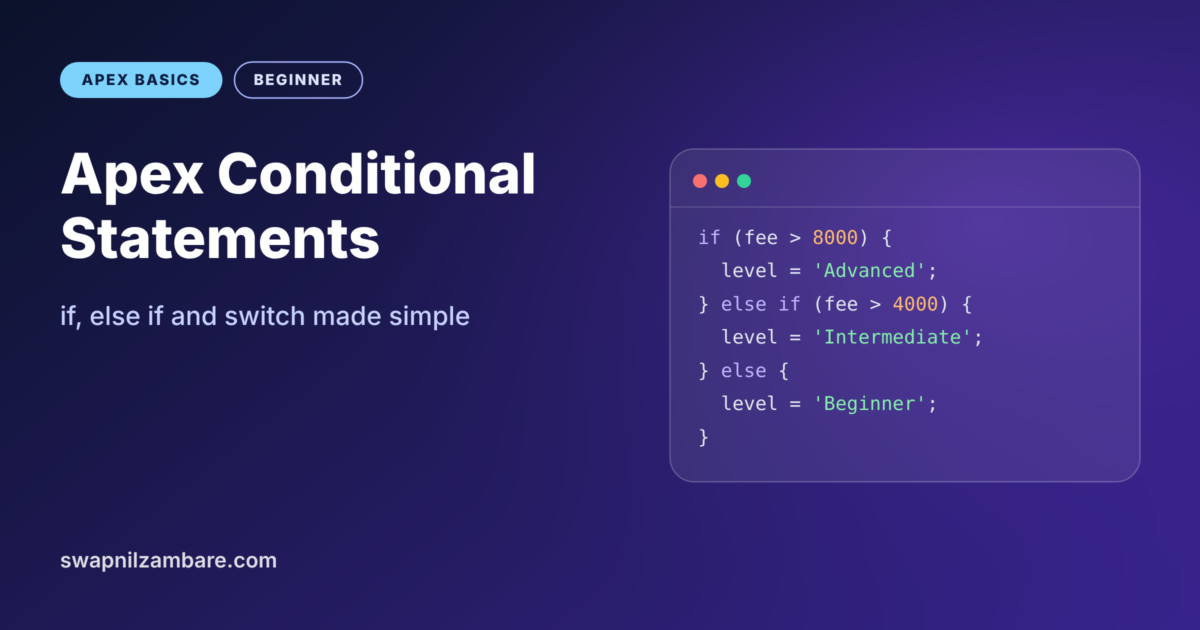
Apex Conditional Statements let your code make decisions. For example, they answer “Is the fee too low?” or “Which level is this course?”. Then…
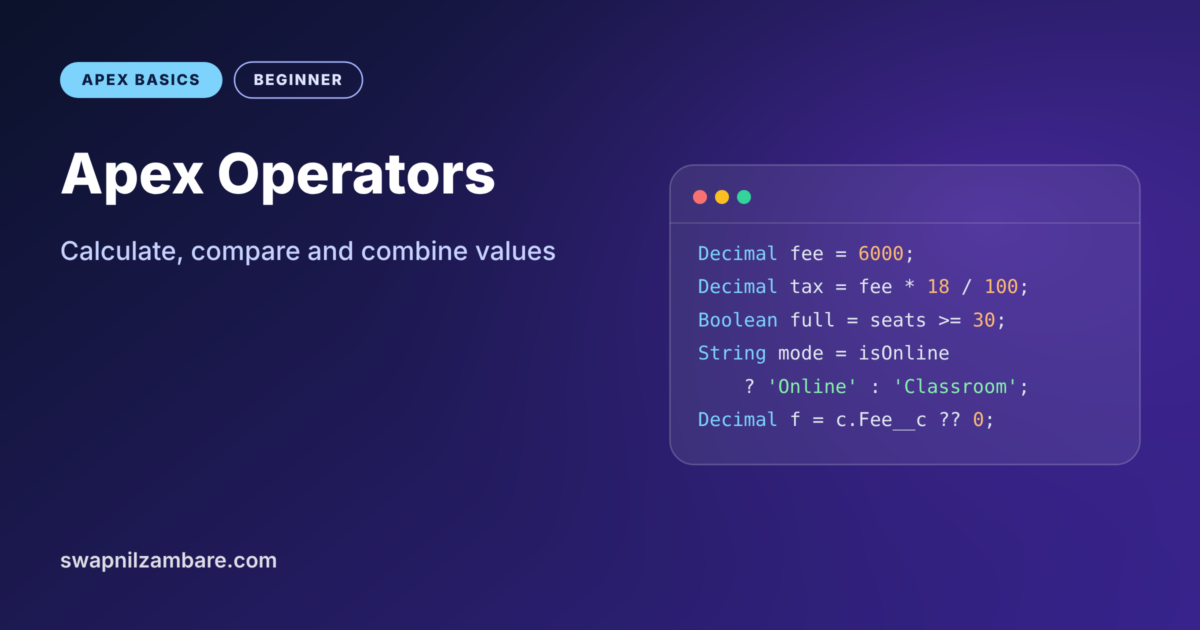
Apex Operators are the symbols that let your code add numbers, compare values and combine conditions. Without them, variables would just sit there holding…
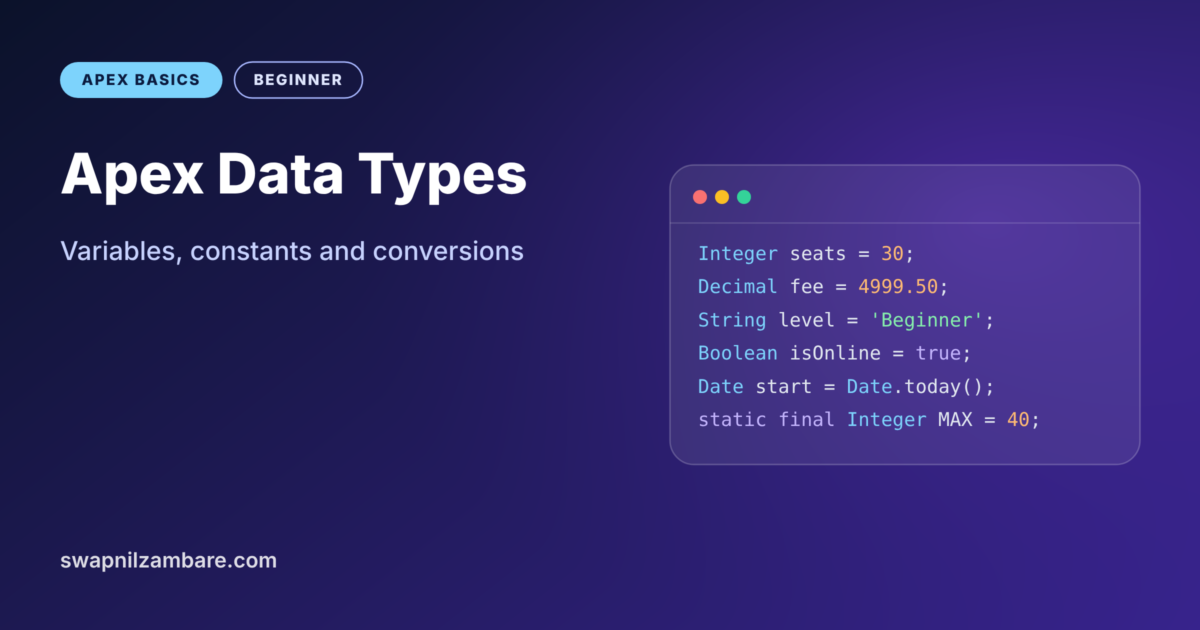
Apex Data Types decide what kind of value each variable can hold. For example, a variable may hold a number, some text or a…
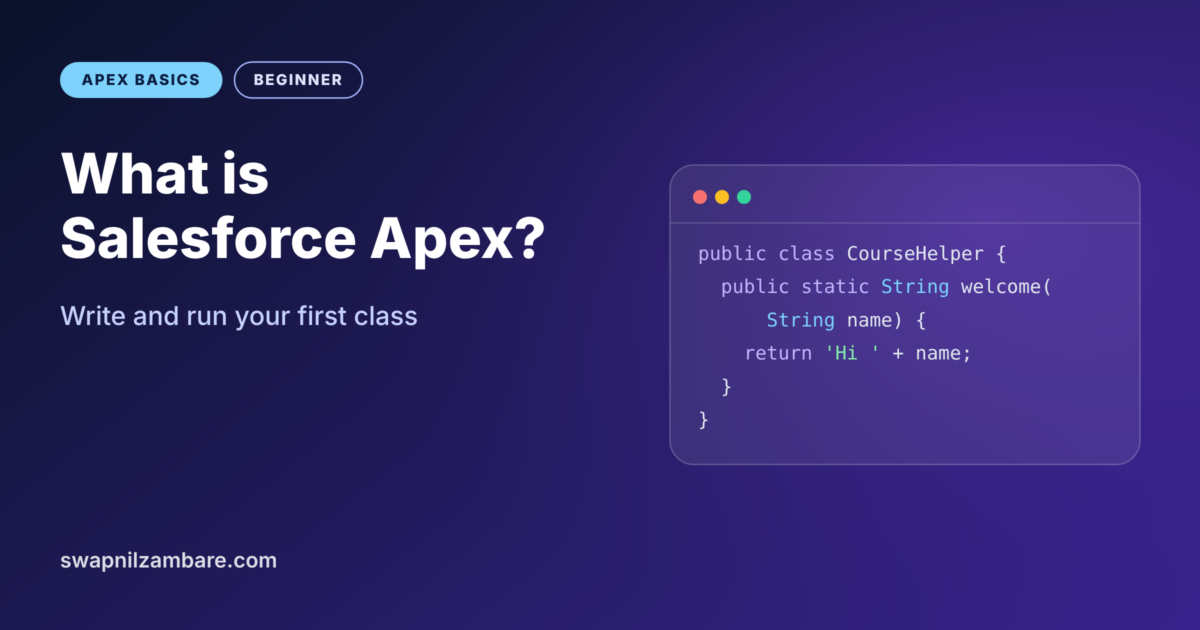
Salesforce Apex is the programming language that runs inside Salesforce, and almost every developer job asks for it. In this post, you will learn…
Git for Salesforce is the skill that turns a solo coder into a real team developer. Git keeps a full history of every change…
The Salesforce Developer Console is a code tool that lives right inside your browser. You do not install anything. You open it from Setup,…