Level: IntermediateLightning Web Components
Visualforce Basics and Standard Controllers Explained
Visualforce Basics start with one idea: a page of tags that Salesforce turns into HTML on the server. You write markup like apex:page and…
Topic
Visualforce Basics start with one idea: a page of tags that Salesforce turns into HTML on the server. You write markup like apex:page and…
Apex Crypto gives you hashing, message signatures and AES encryption inside Salesforce. The most common real use is verifying that a webhook really came…
Hierarchy Custom Settings let you store a value once for the whole org, then override it for a profile or even a single user.…
Approval Processes in Apex let your code submit a record for approval, approve it, reject it or recall it, without anyone clicking a button.…
Inbound Email Services let Salesforce receive an email and run your Apex code on it. A parent emails an enquiry address, and your class…
Sending Email from Apex gives you full control over who gets a message, what it says and when it goes out. A scheduled job…
An Apex Custom Iterator lets you decide how a for loop moves through data. Instead of looping a list that already exists, you supply…
Apex Comparable lets you decide how a list of your own objects should be sorted. By default, Apex can sort numbers and text, but…
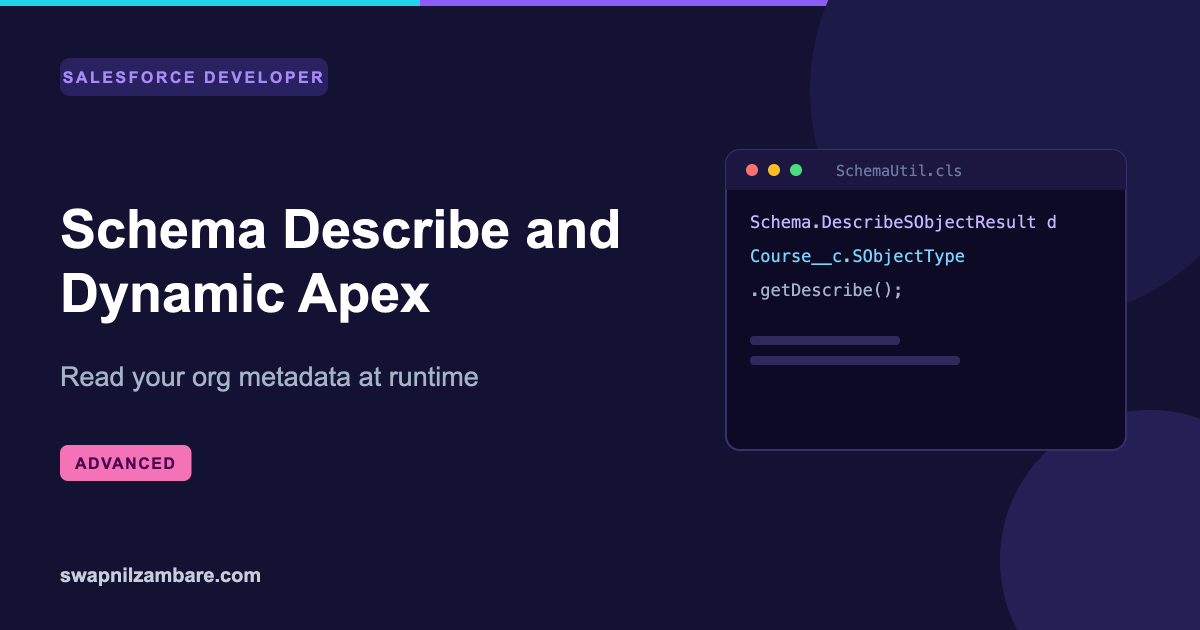
Schema Describe lets your Apex ask the org what objects and fields actually exist, while the code is running. So you can build a…
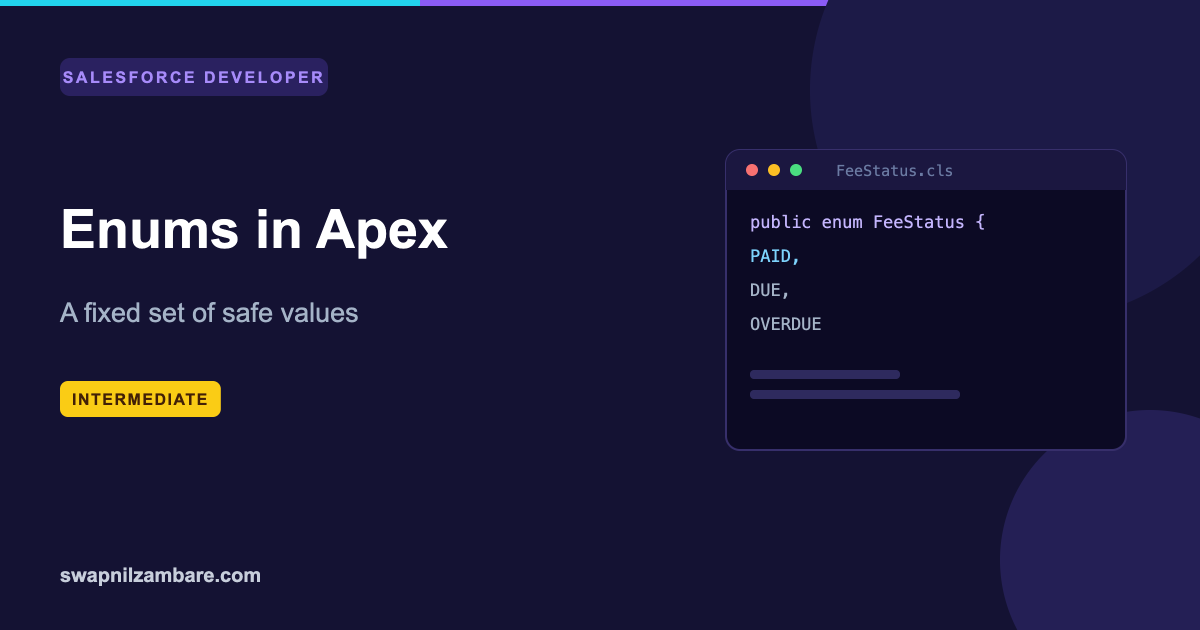
Apex Enums let you define a small fixed set of named values, such as PAID, DUE and OVERDUE. The compiler then refuses anything outside…