Org Management Interview Questions check how well you look after the whole Salesforce org, not just one app or object. This is Part 16 of our 25-part series, with questions on company settings, currencies, languages, limits, packages, backups and moving to Lightning.
In Part 1, we covered org setup at a basic level. Here we go further, into the settings that affect every user. Our company settings guide and Translation Workbench and multi-currency guide are good starting points.
How to Use These Org Management Interview Questions
First, open Setup in your practice org and find each setting named here. Next, learn what each setting changes for users, because interviewers care about impact more than clicks. Then practise the scenario questions, since they test how you protect a live org.
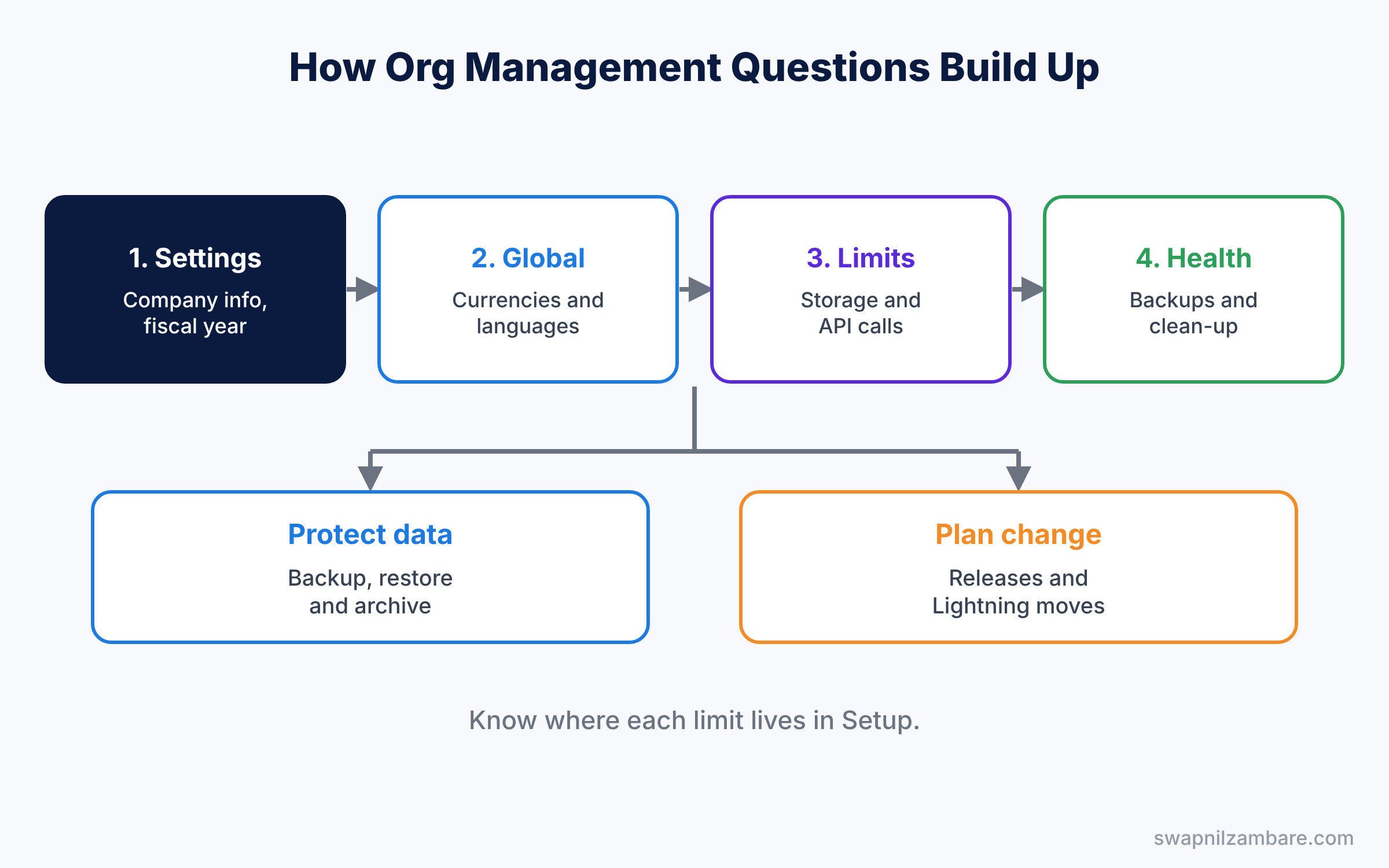
Org Management Interview Questions on Company Settings
Study with Company Settings.
- What is stored in Company Information?
- What is the default locale, and what does it change?
- Define the default time zone of an org.
- What is a fiscal year in Salesforce?
- What is the difference between a standard and a custom fiscal year?
- Can you change a custom fiscal year back to standard?
- What are business hours?
- What are holidays, and where are they used?
- Can one org have many sets of business hours?
- Where do you find your org ID?
- What is the difference between the org default currency and a user currency?
- How do you change the company address shown on quotes?
- What is My Domain, and why is it required?
- Scenario: support works 24 hours in India but 9 to 5 in the UK. How do you set business hours?
- Scenario: finance moves to a fiscal year that starts in April. What do you check first?
Currencies and Languages Questions
Study with Translation Workbench and Multi-Currency.
- What is multi-currency?
- Can you turn off multi-currency after you turn it on?
- What is the corporate currency?
- What is a personal currency?
- Define a conversion rate.
- What is advanced currency management?
- What are dated exchange rates?
- Which objects use dated exchange rates?
- What is the Translation Workbench?
- What can you translate with it?
- Explain the difference between a user language and a user locale.
- What is a platform-only language?
- What happens to existing records when you turn on multi-currency?
- How do currency fields show in reports for different users?
- What is a translated picklist value?
- How do you export and import translations?
- Scenario: sales in Europe wants deals in euros, but leaders want reports in dollars. What do you set up?
- Scenario: picklist values show in English for French users. What do you check?
Org Management Interview Questions on Org Limits and Storage
Study with Data Management.
- Where do you see org limits?
- What is the difference between data storage and file storage?
- How much storage does a record use, at a high level?
- What happens when storage is full?
- What is the API request limit?
- How do you see which objects use the most storage?
- What is the System Overview page?
- What is Salesforce Optimizer?
- Briefly, what does an Optimizer report show?
- How often should you check org health?
- What is the daily limit on bulk API batches, at a high level?
- Where do you see the number of custom objects used?
- What happens when you hit the custom field limit on an object?
- How do you get alerts before a limit is reached?
- Scenario: data storage is at 95 percent. What steps do you take?
- Scenario: an integration hits the daily API limit by noon. What do you do?
Packages and AppExchange Questions
Study with AppExchange apps.
- What is AppExchange?
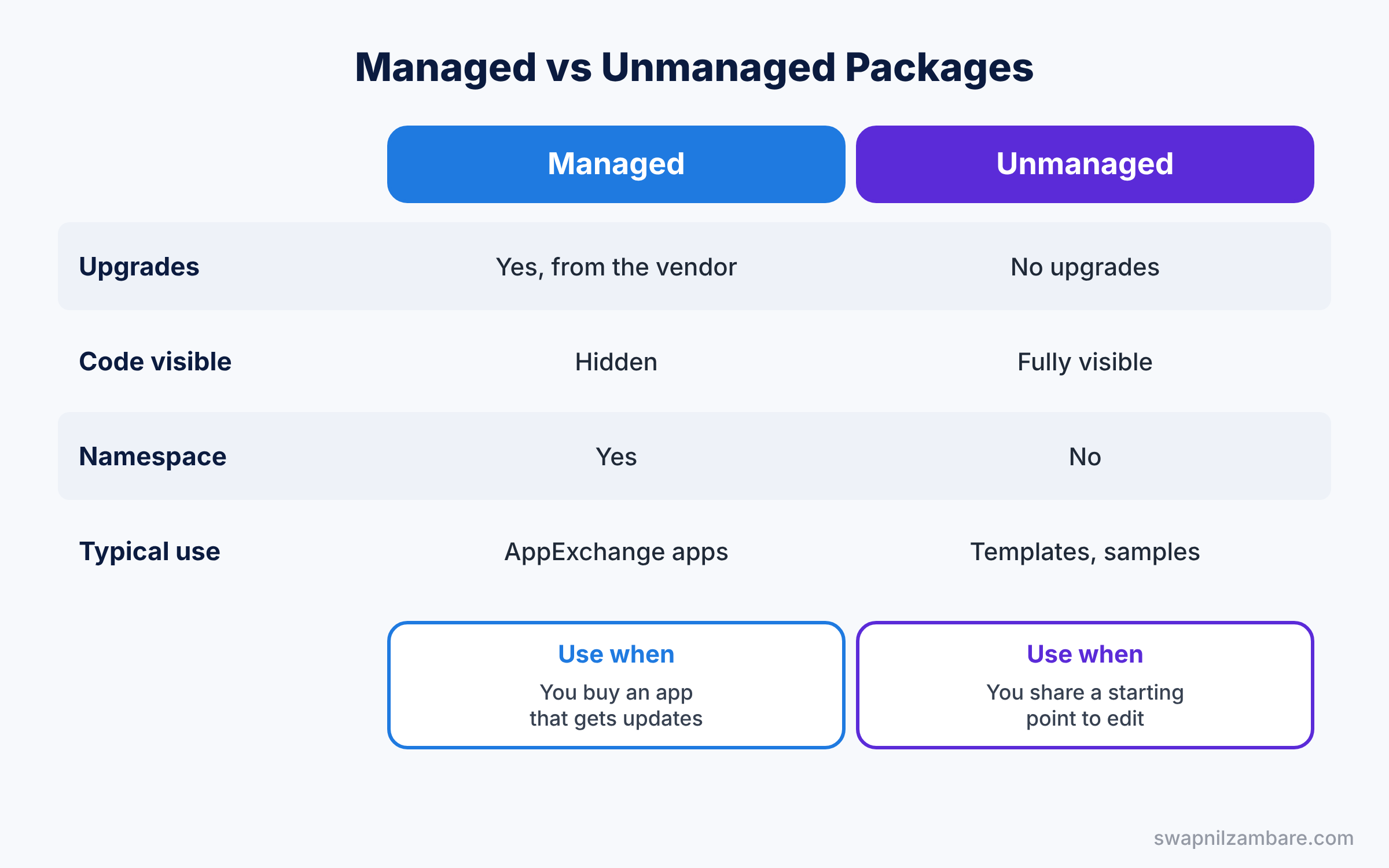
- What is a managed package?
- Define an unmanaged package.
- What is a namespace prefix?
- What is a package licence?
- How do you assign package licences to users?
- How do you install a package in a sandbox first?
- What is the security review for AppExchange apps?
- How do you uninstall a package?
- What happens to data when you uninstall a package?
- What is a package upgrade?
- Explain the difference between a free and a paid AppExchange app.
- What is a package dependency?
- What does “Install for Admins Only” mean?
- Scenario: a team installed an app in production without testing. What do you do now?
- Scenario: an app needs access to all data. How do you judge the risk?
Org Management Interview Questions on Backup, Restore and Archiving
Study with Data Export and the Recycle Bin.
- Is Salesforce data backed up for you?
- What is the weekly data export?
- What is Salesforce Backup, at a high level?
- Explain the difference between a backup and an archive.
- How long do deleted records stay in the Recycle Bin?
- What is a hard delete?
- What are Big Objects?
- When would you use a Big Object?
- What is a data retention policy?
- How do you archive old cases?
- What is metadata backup, and why does it matter?
- How do you restore a single field value that a user overwrote?
- What is a restore plan, and who should approve it?
- How often should you test a restore?
- Scenario: a user deleted 5,000 accounts last month. How do you get them back?
- Scenario: legal says you must keep emails for seven years. What do you plan?
Lightning Experience and Classic Questions
Study with Lightning App Builder.
- What is the difference between Classic and Lightning Experience?
- What is the Lightning Experience Transition Assistant?
- Define the Readiness Check.
- What are the main reasons to move to Lightning?
- Do Visualforce pages work in Lightning?
- What are JavaScript buttons, and why do they not work in Lightning?
- How do you replace a JavaScript button?
- Can you force all users into Lightning?
- What is the “Switch to Classic” permission?
- How do you plan training for a move to Lightning?
- What is a Lightning Experience rollout plan?
- What is a Lightning App, and how is it different from a Classic app?
- Scenario: a team refuses to leave Classic. How do you handle it?
- Scenario: an old org still has many custom buttons. How do you plan the move?
Org Management Interview Questions on Release and Org Health
Study with Release Updates.
- How many major releases does Salesforce have each year?
- What is a release update?
- What is a sandbox preview?
- How do you read release notes quickly?
- What is Health Check?
- What is technical debt in an org?
- How do you find unused fields?
- How do you find unused reports?
- What is an org health review?
- What is a naming convention, and why does it help?
- Define a release note review meeting.
- How do you test a release in a preview sandbox?
- What is an org health dashboard?
- Scenario: a release update will change sharing behaviour next month. What do you do?
- Scenario: a new admin joins an org with no notes. Where do you start?
Org Management Interview Questions FAQ
Are org management questions common?
Yes, mostly for admins with two or more years of experience. Storage, currencies and packages are asked most.
Do I need to remember exact limits?
No. Know where to find them in Setup and how to react when a limit is close.
Official Resources
- Language, Locale and Currency (Salesforce Help)
- Monitor Your Organization (Salesforce Help)
- Salesforce Platform Administrator Credential (Trailhead)
Quick Recap
- These Org Management Interview Questions cover settings, currencies, languages, limits, packages, backups and Lightning.
- Know what each company setting changes for users.
- Learn where to check storage and API limits.
- Explain backup, restore and archive as three different things.
- Next, test your automation skills with advanced Flow questions.
What’s Next?
Continue with the next part. Read Salesforce Flow Interview Questions: Advanced Automation (Part 17).