Level: AdvancedAdvanced Admin
Salesforce Order of Execution Explained for Admins
Salesforce Order of Execution is the fixed sequence of steps Salesforce follows every time a record is saved, from validation rules to flows, triggers…
Tag
Salesforce Order of Execution is the fixed sequence of steps Salesforce follows every time a record is saved, from validation rules to flows, triggers…
Salesforce Schema Builder shows your objects, fields and relationships on one visual canvas, and it lets you add new objects and fields by dragging…
Salesforce Data Migration is the planned move of records from an old system, such as spreadsheets or another CRM, into Salesforce without losing links…
Custom Metadata Types let you store app settings, such as discount rates or routing rules, as records that admins can change without code and…

Salesforce Restriction Rules hide records from users who would otherwise see them through sharing, so each person only sees the records that are right…

Salesforce Delegated Administration lets you give a trusted user a few admin powers, like creating users or resetting passwords for their own team, without…

Salesforce Permission Set Groups bundle several permission sets into one package that matches a job role, such as Sales Rep or Support Agent. Instead…
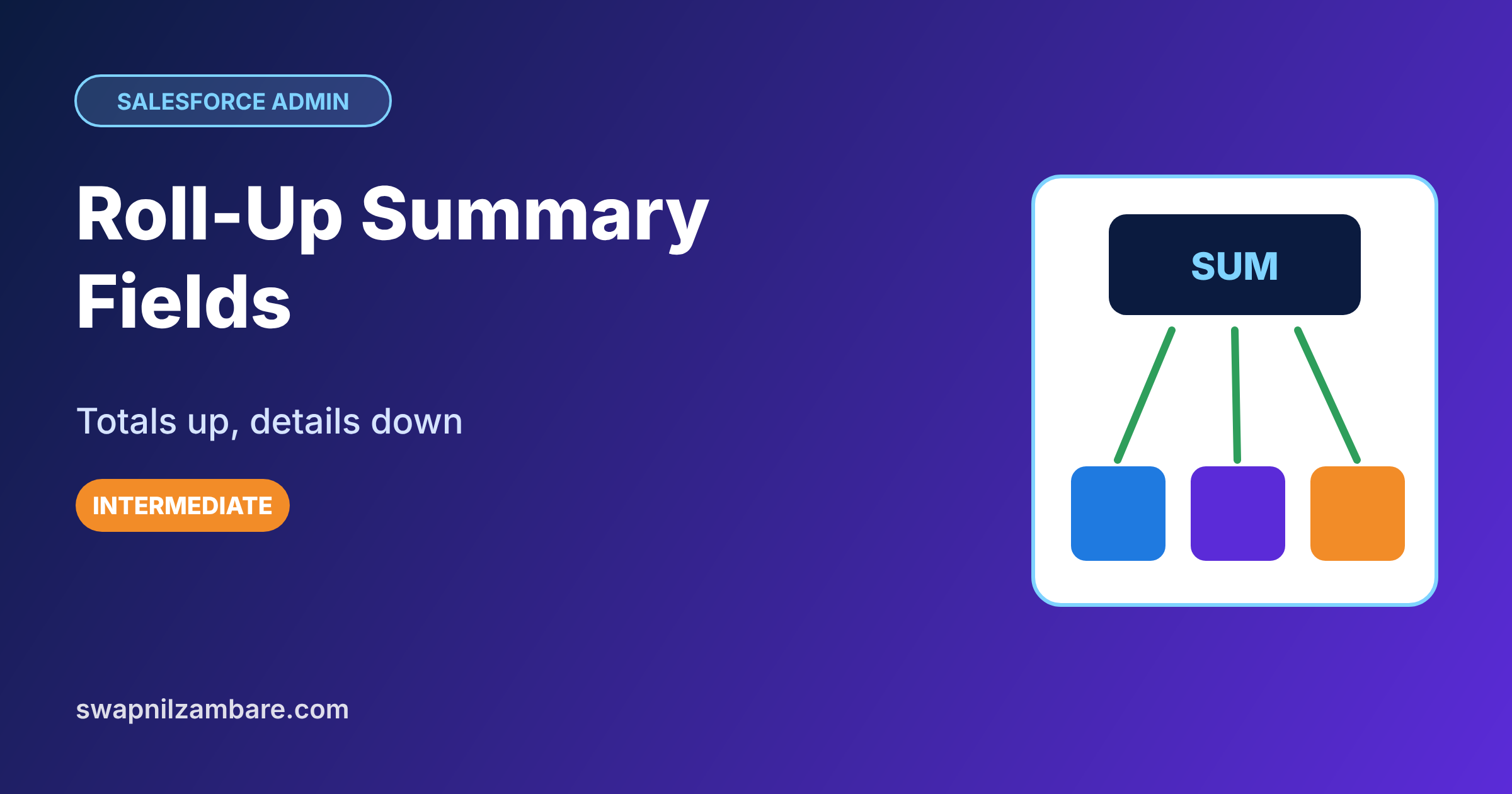
Salesforce Roll-Up Summary Fields calculate totals from child records and store them on the parent, such as the total fees collected for a course.…
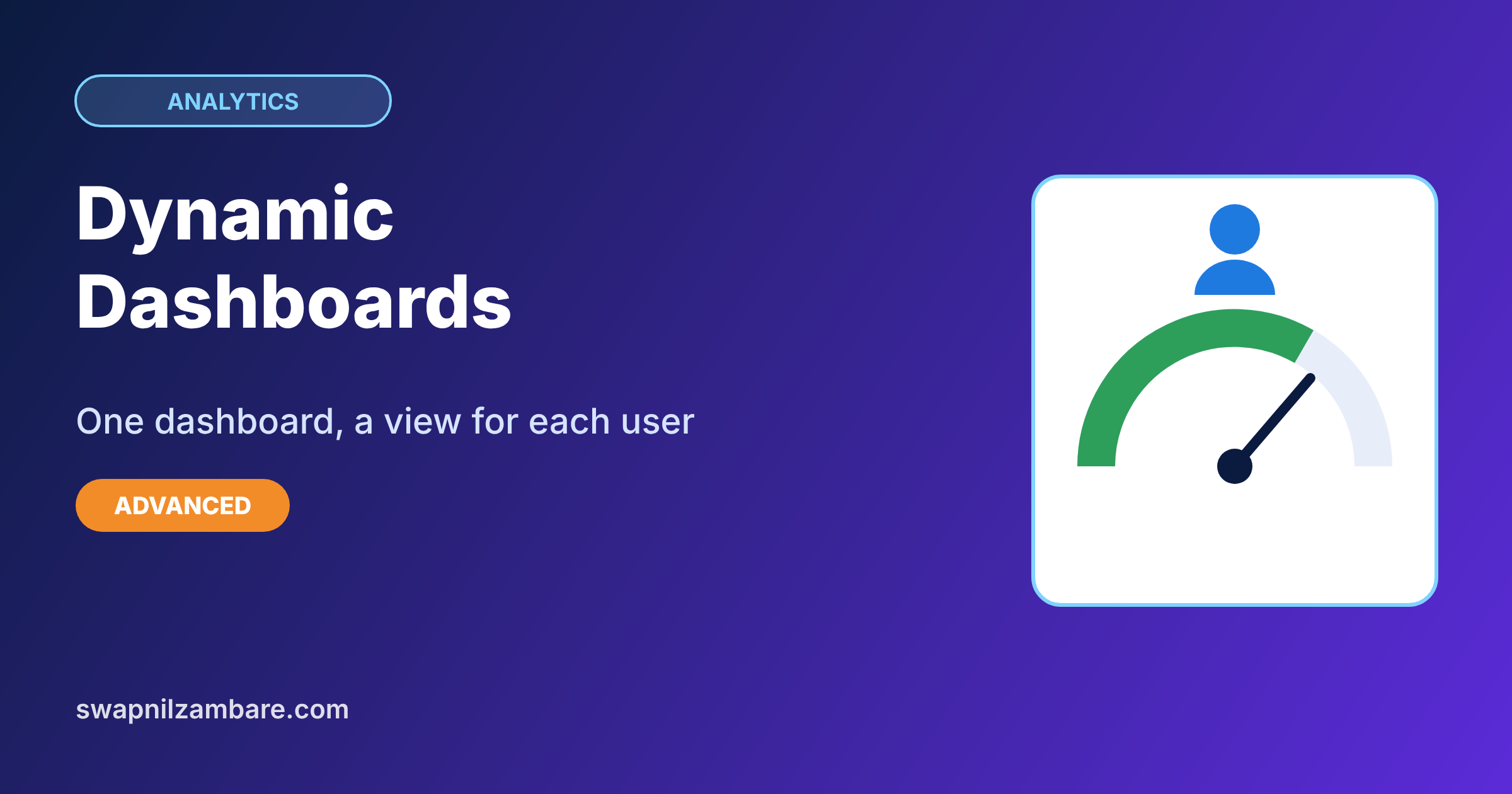
Salesforce Dynamic Dashboards show each viewer the data they are allowed to see, so one dashboard can serve a whole sales team. Rahul sees…
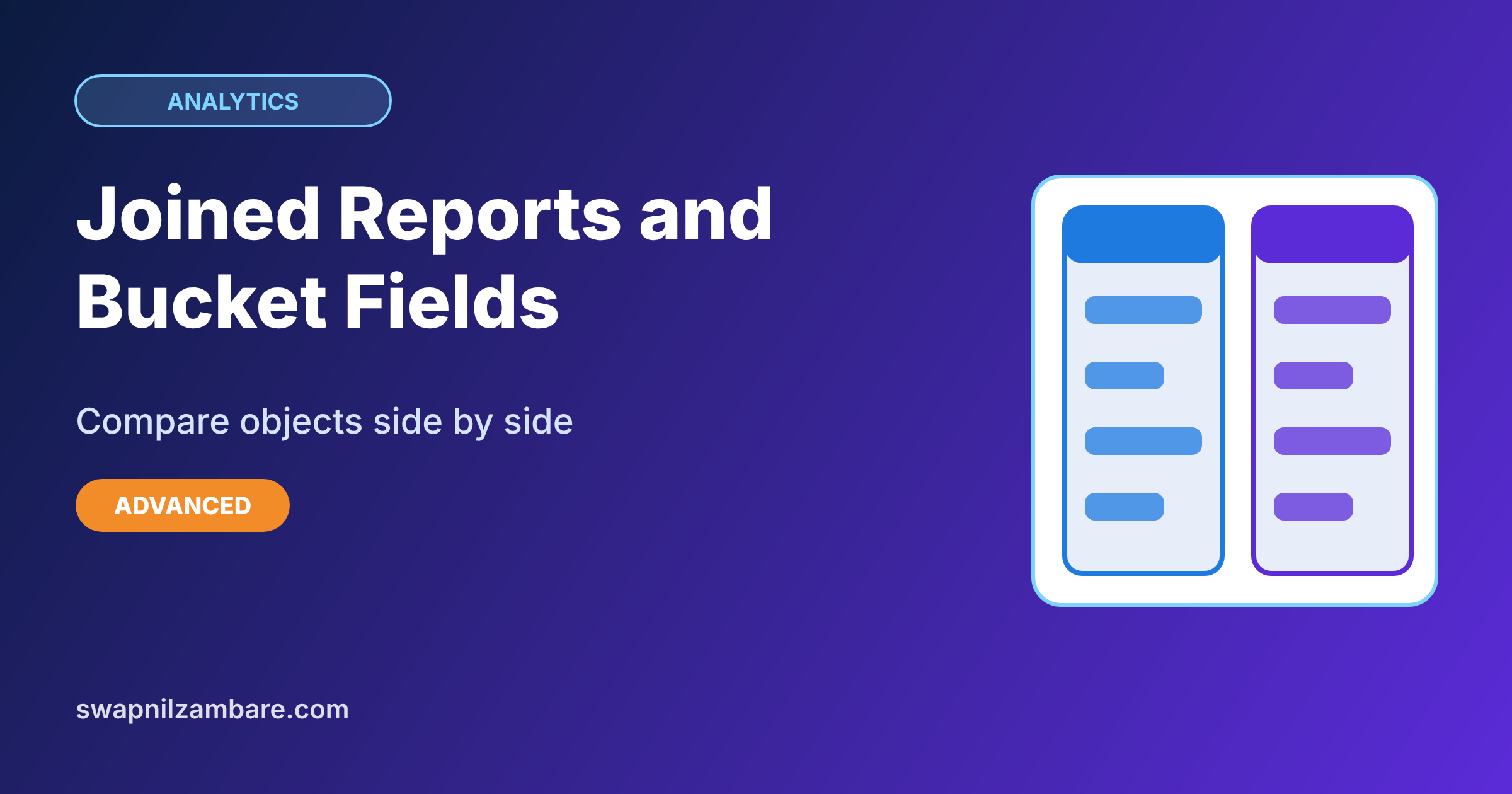
Salesforce Joined Reports show several reports side by side in one view, grouped by a common field such as Account Name. Each part, called…