Level: AdvancedSalesforce
Large Data Volumes in Salesforce: Query Optimization and Indexes
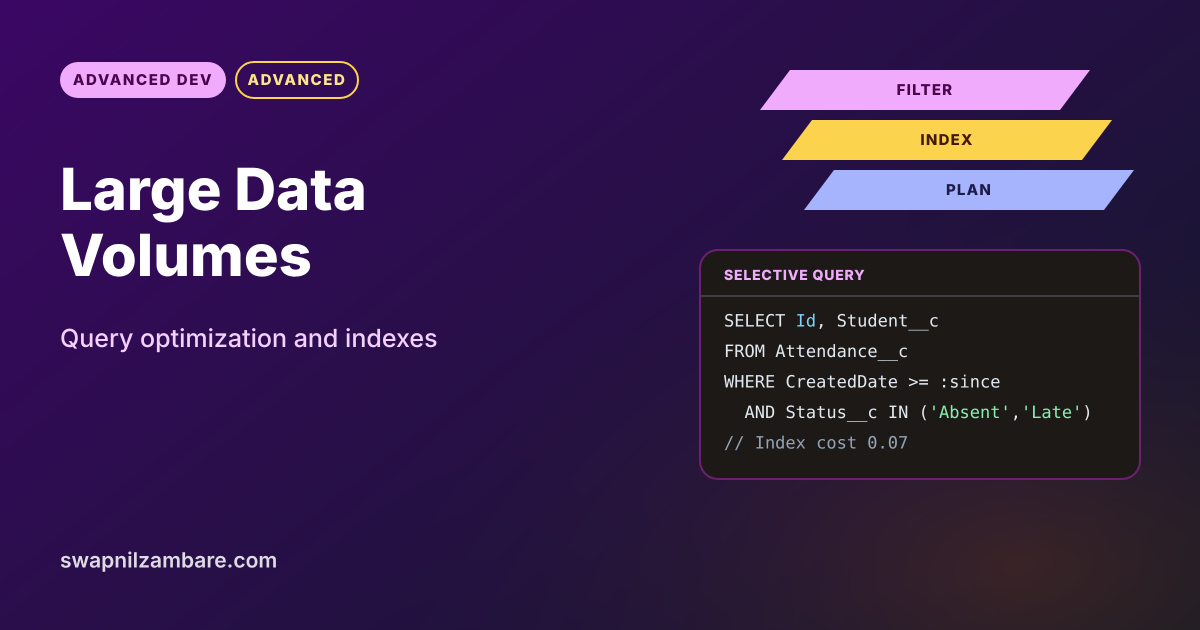
Large Data Volumes in Salesforce means objects with millions of records, where normal queries, reports and sharing start to slow down or fail. At…
Tag
Large Data Volumes in Salesforce means objects with millions of records, where normal queries, reports and sharing start to slow down or fail. At…
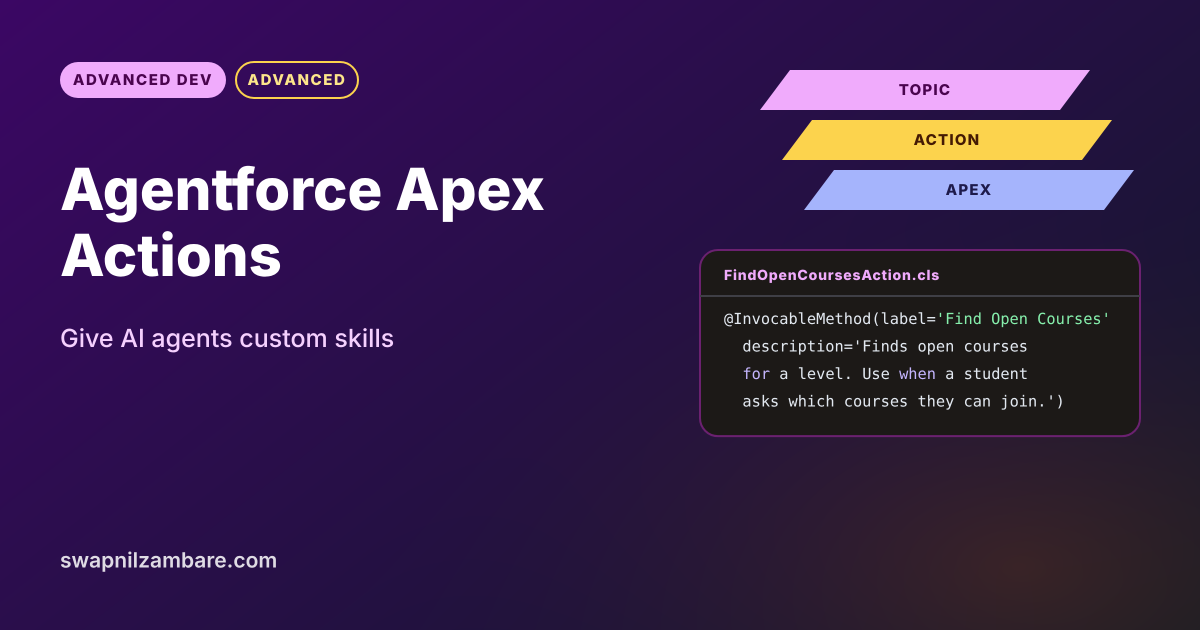
Agentforce Apex Actions let an AI agent run your own Apex code, so it can look up data, apply business rules or call other…
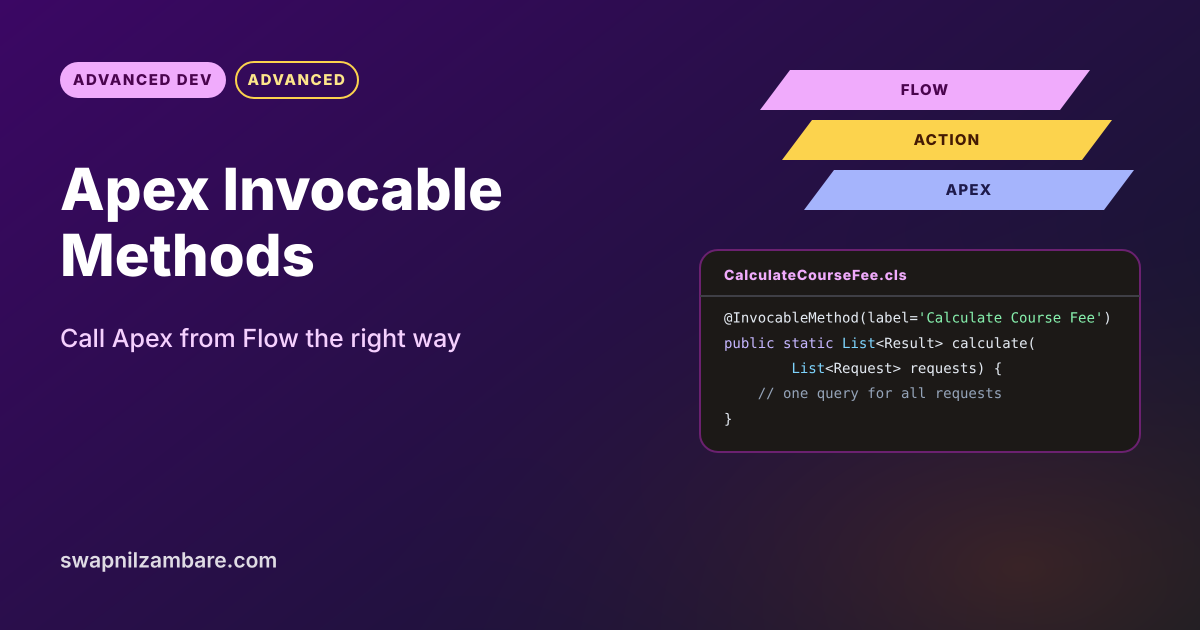
Apex Invocable Methods let admins call your Apex code from Flow, as if it were a standard action. You mark one static method with…
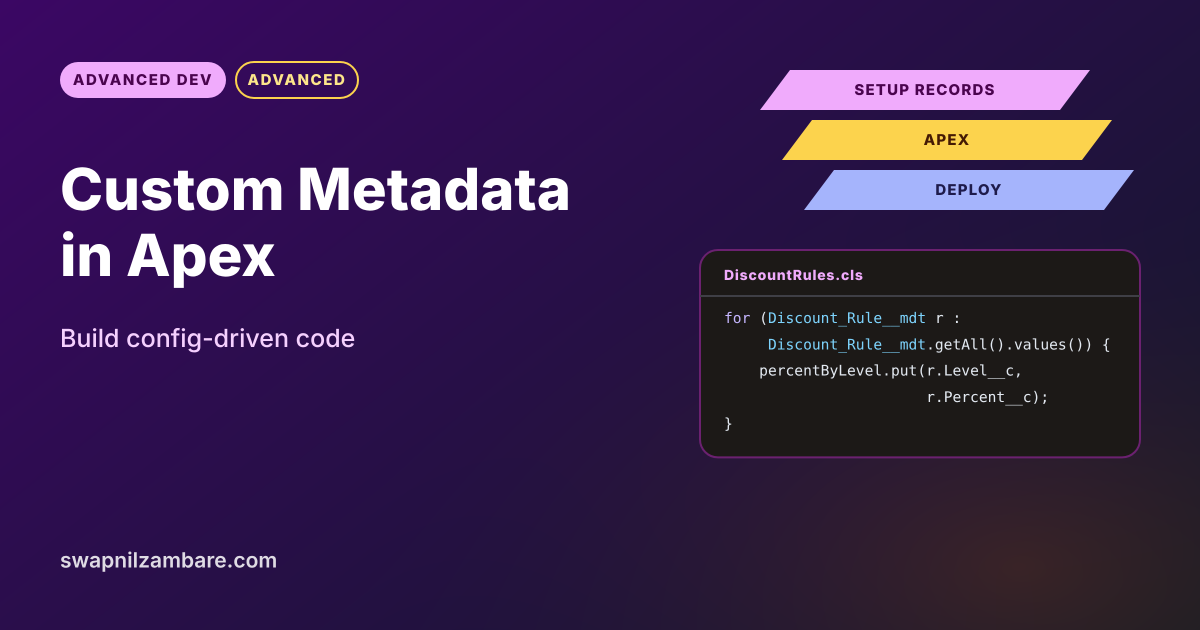
Custom Metadata in Apex lets your code read rules and settings that admins manage in Setup, so business changes do not need a code…
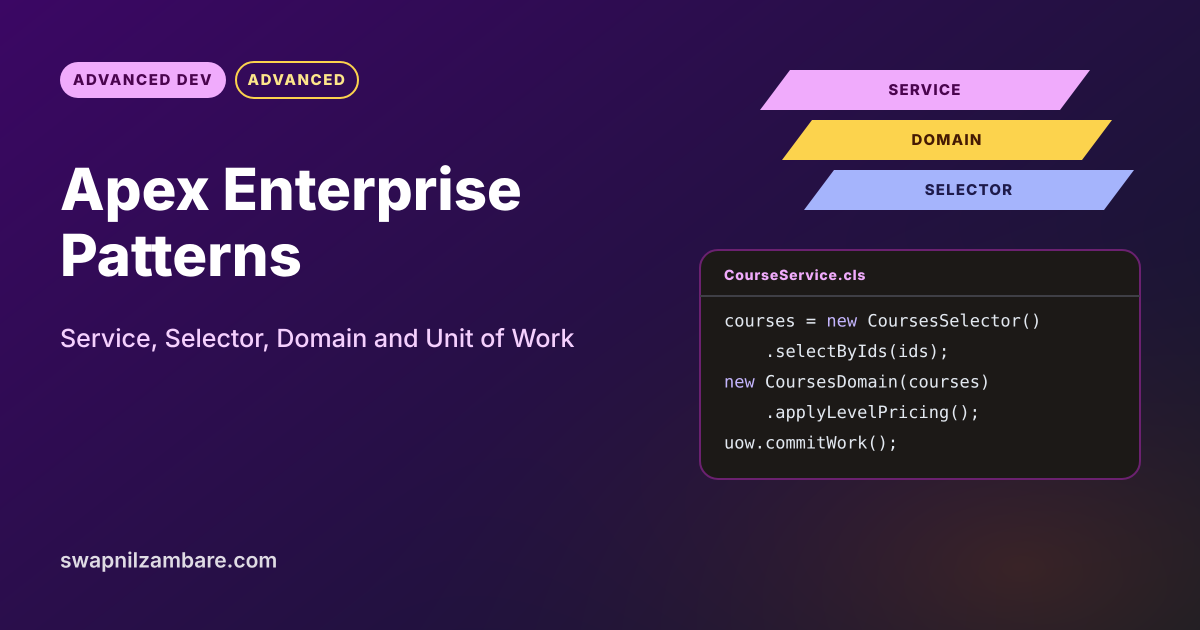
Apex Enterprise Patterns split a large Salesforce app into clear layers: Service, Domain, Selector and Unit of Work. Each layer has one job, so…
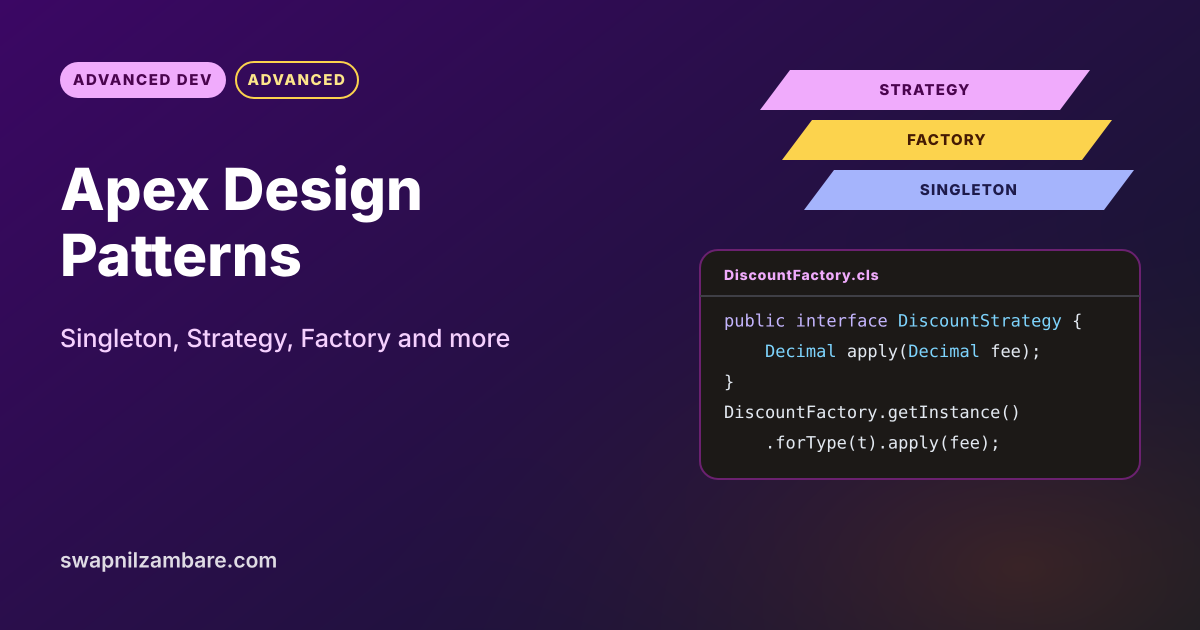
Apex Design Patterns are proven ways to organise Apex code so it stays easy to change, test and reuse as your org grows. A…
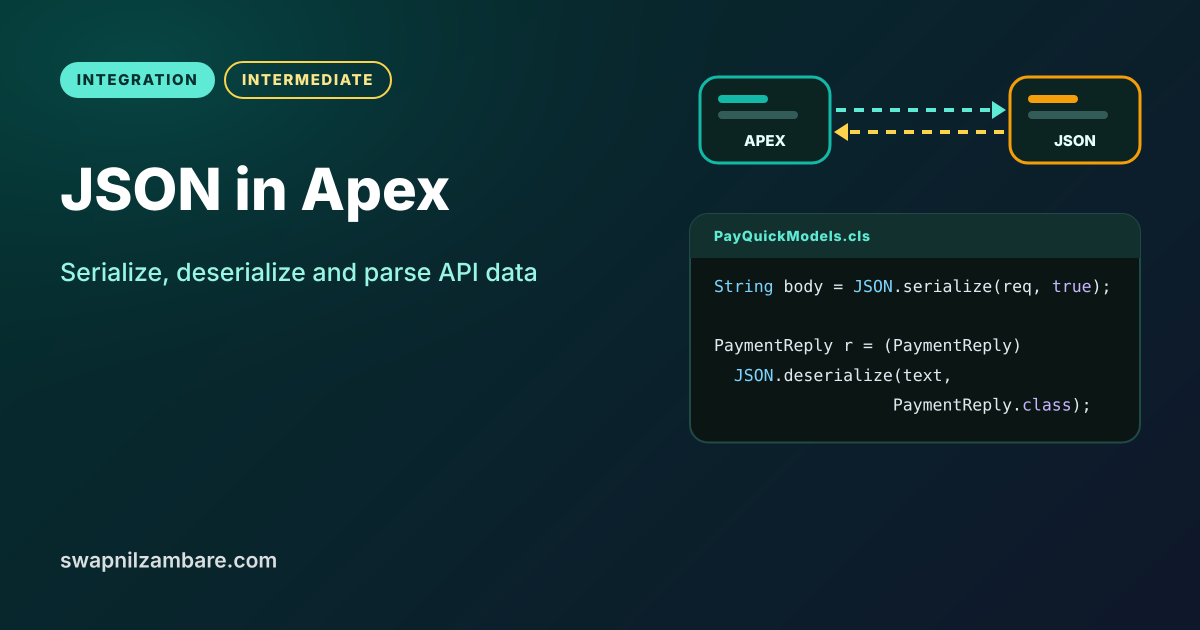
JSON in Apex is how your code turns Salesforce data into text for an API, and turns API replies back into Apex objects. Almost…
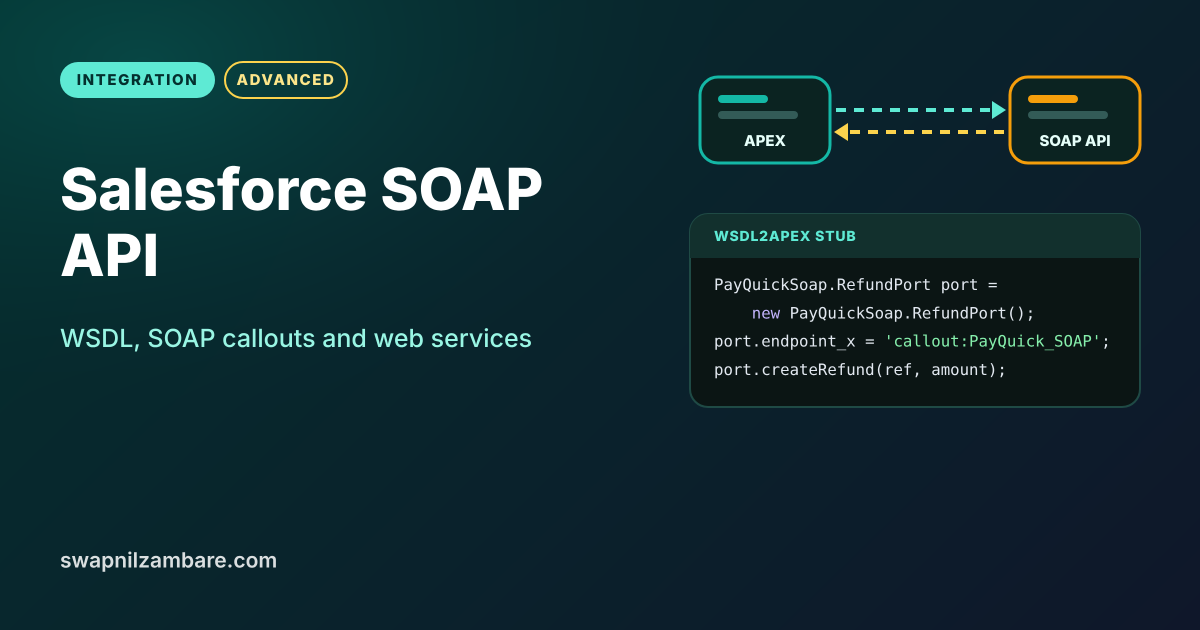
The Salesforce SOAP API is the older, XML-based way for systems to talk to Salesforce, and many large companies still depend on it. SOAP…
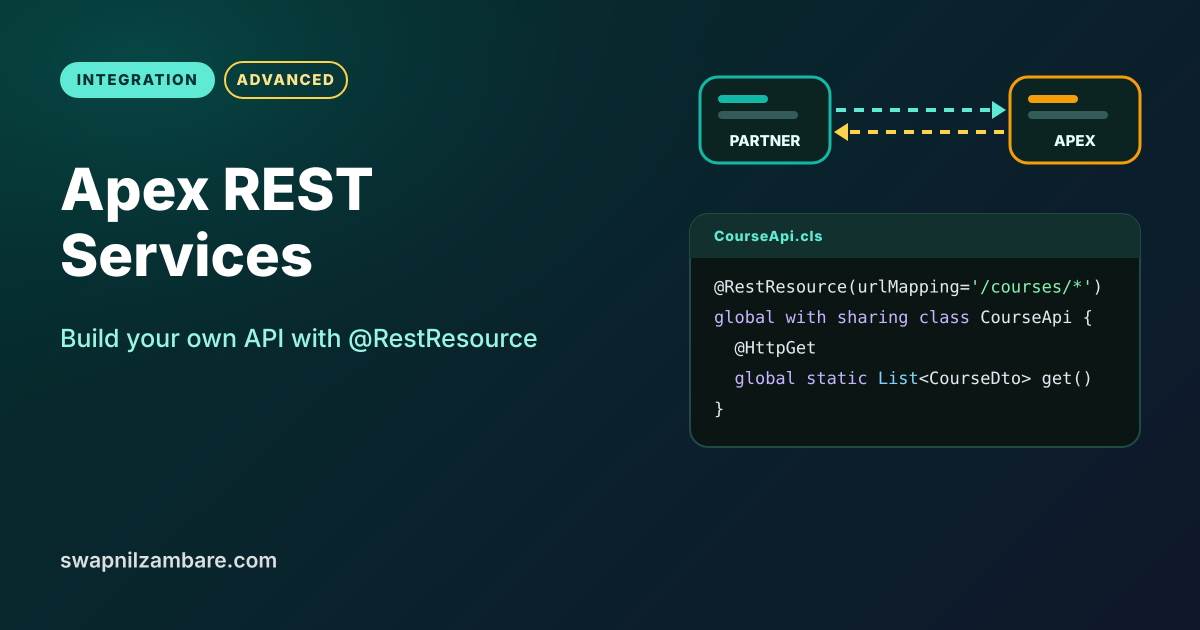
Apex REST Services let you build your own API inside Salesforce, so outside systems can call your Apex logic over HTTPS. You mark a…
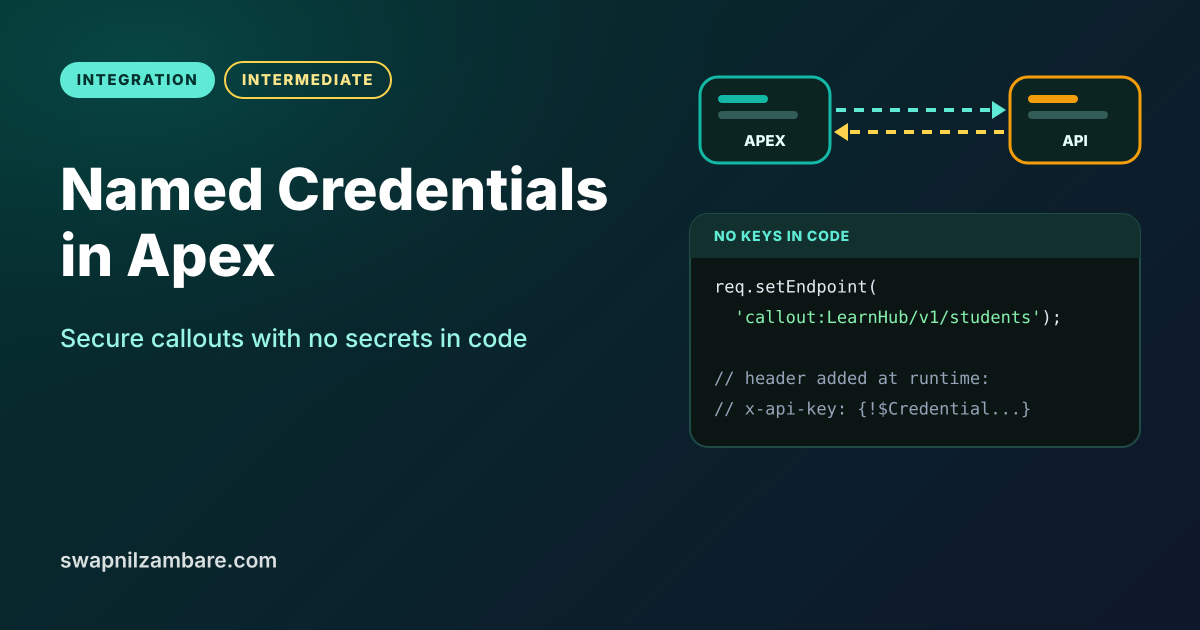
Named Credentials in Apex let your code call an external API without ever holding its URL, password or API key. The code just says…