Salesforce User Access Policies: Automate Permission Sets
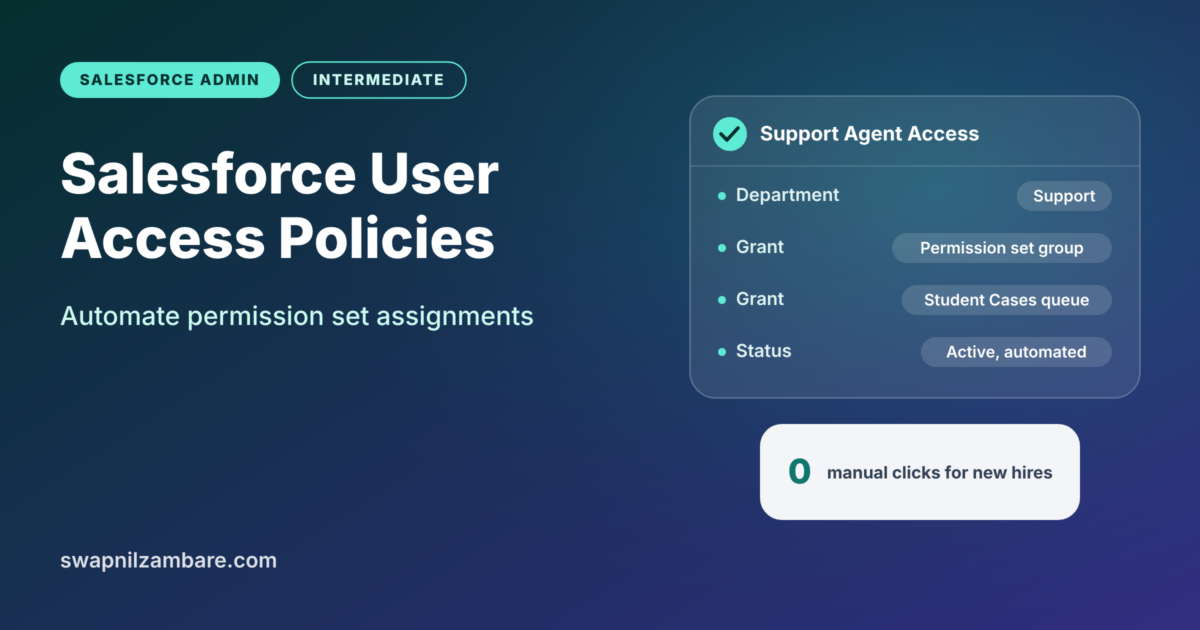
Salesforce User Access Policies let you assign permission sets, groups and queues to users automatically, based on rules you define. Instead of clicking through…
Topic

Salesforce User Access Policies let you assign permission sets, groups and queues to users automatically, based on rules you define. Instead of clicking through…

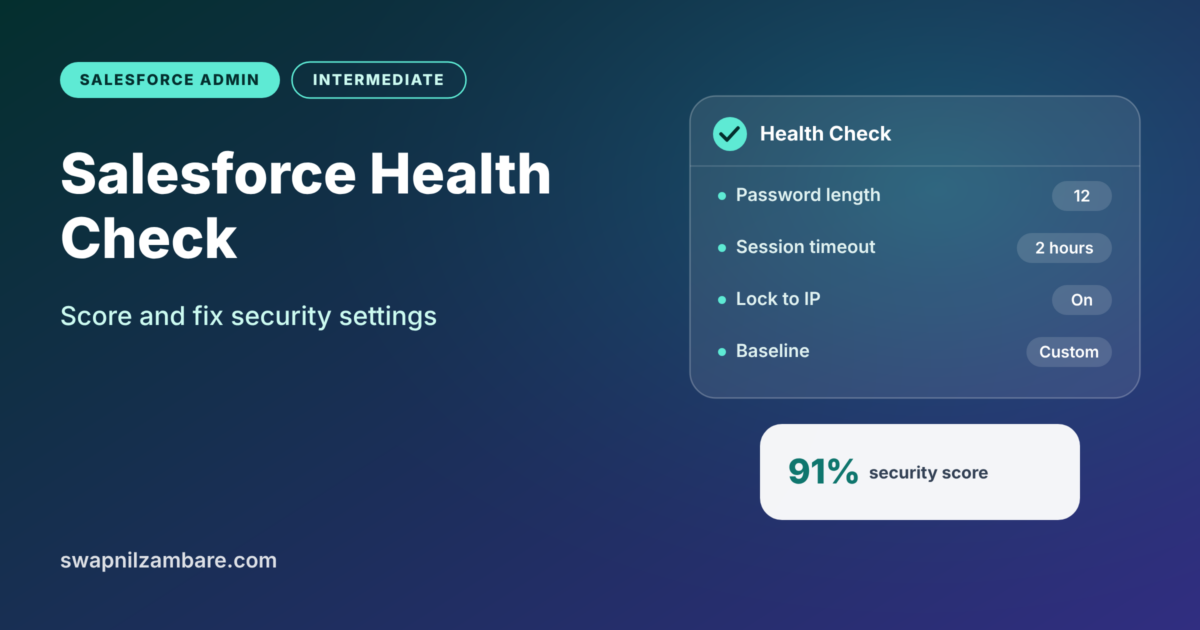
Salesforce Health Check gives your org a security score and a list of settings that need attention. In one screen, it compares your password,…

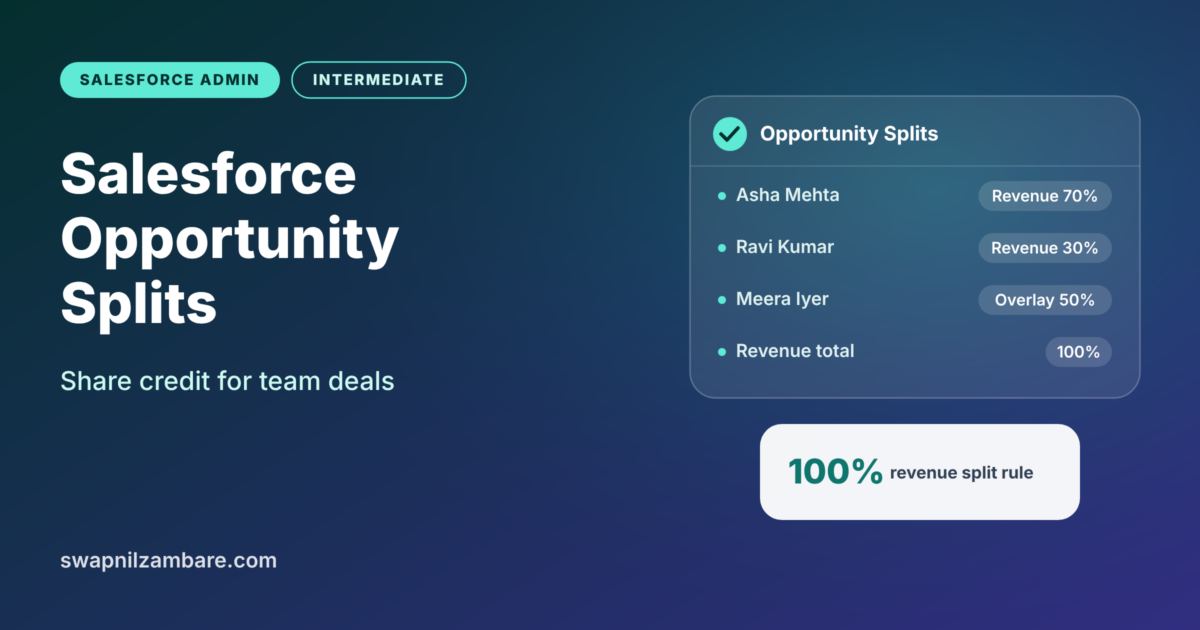
Salesforce Opportunity Splits let a sales team share credit for one deal. Say three people help close a big contract. With splits, each one…

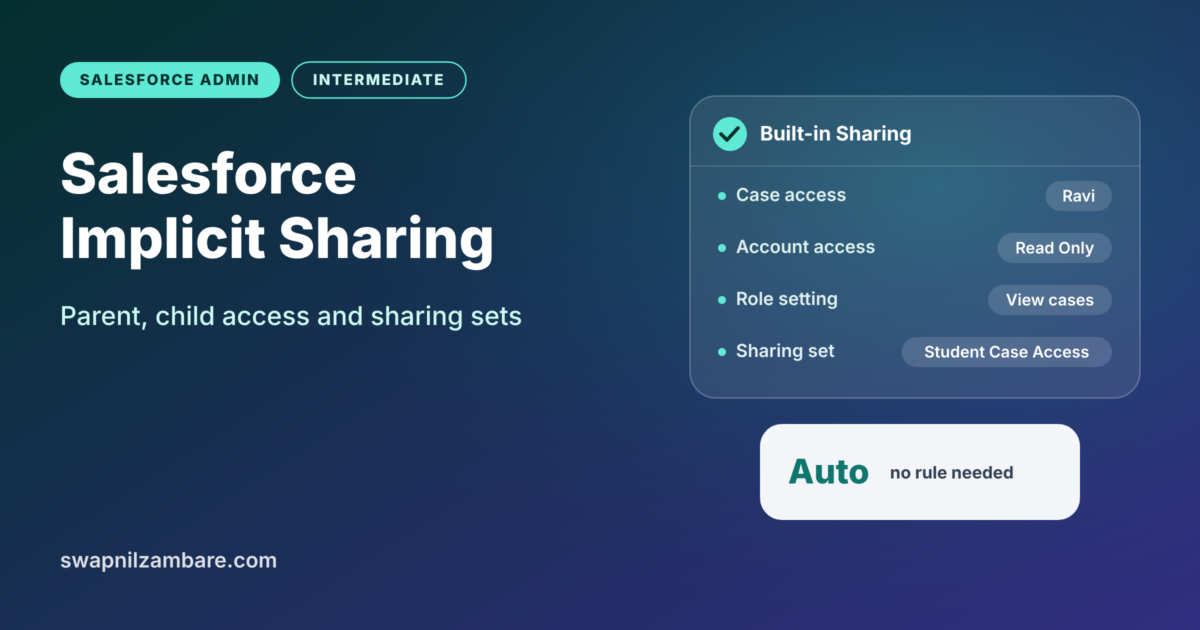
Salesforce Implicit Sharing is the access Salesforce gives automatically between related records, without any rule or button. For example, if you can see a…

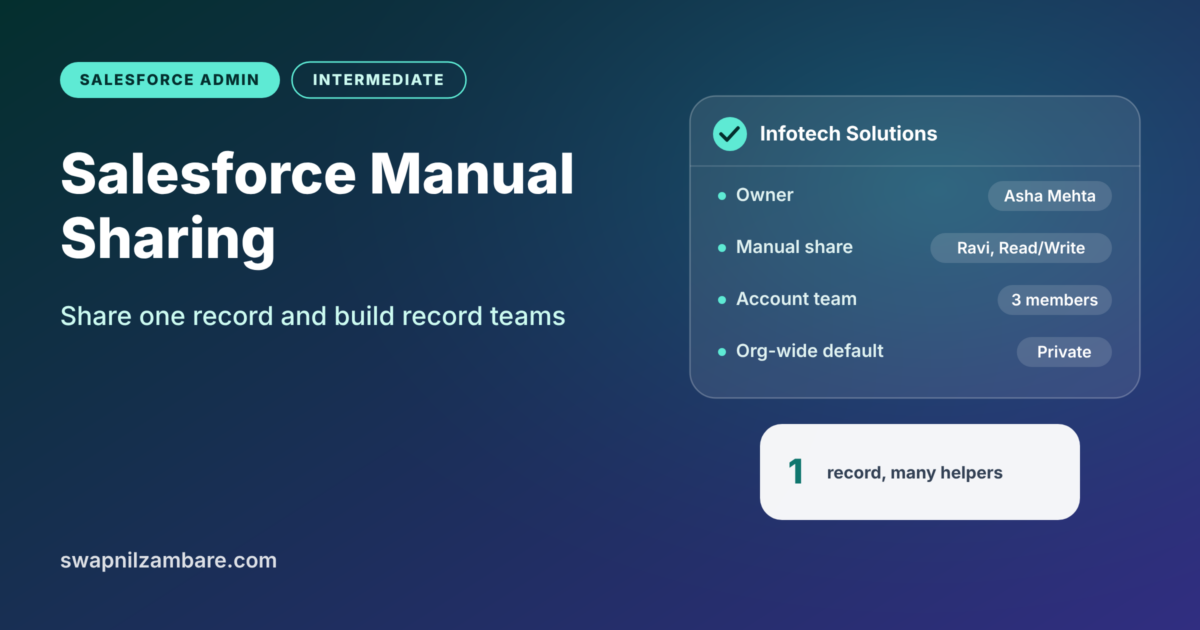
Salesforce Manual Sharing lets a record owner give access to one specific record, one person at a time. Teams take the same idea further.…

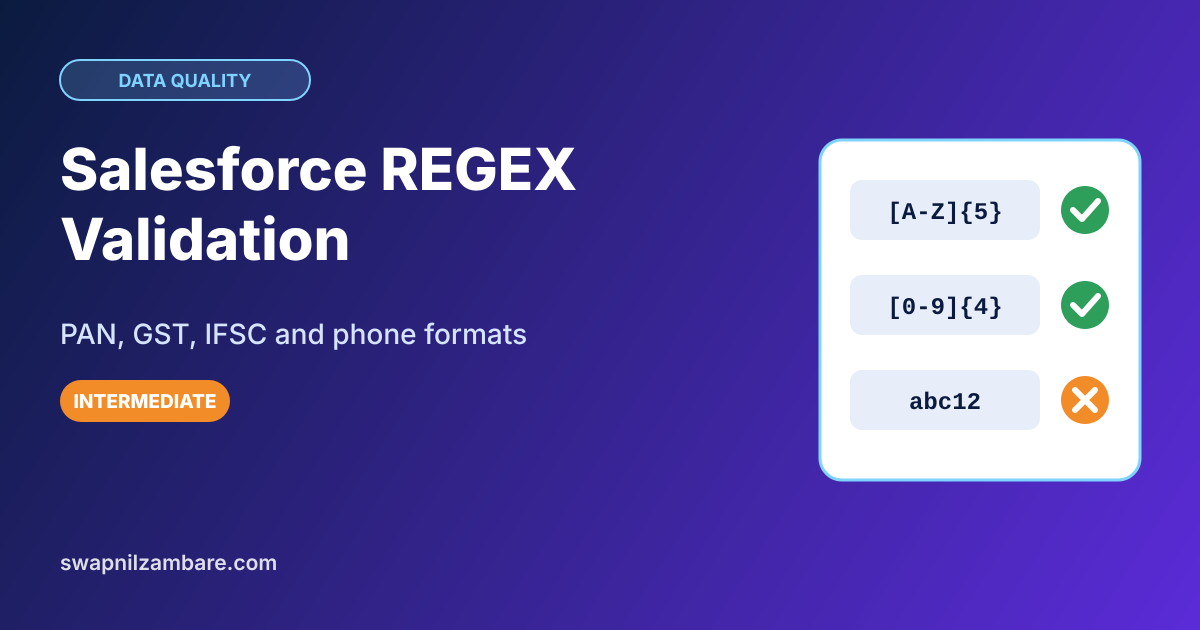
Salesforce REGEX Validation lets you check that a value follows an exact pattern, such as a PAN number, a GSTIN or a 10-digit mobile…

Salesforce Release Updates are changes that Salesforce plans to turn on for every org by a set date, and admins test and enable them…

Agentforce for Admins means setting up AI agents in Salesforce that can answer questions and take actions, like finding upcoming courses or updating a…

Salesforce and Slack work together so teams can see records, get alerts and act on Salesforce data inside Slack conversations, without switching between apps…

Salesforce Experience Cloud lets you build websites and portals, called sites, where customers, partners or the public can log in and work with your…